Photo ID Safety Tags: What They Are and Why Every Workplace Needs Them
14 min read•For Thesafetyfactory.com Picture this: a contractor arrives at your facility first thing in the morning, tools in hand, heading straight for a piece of equipment that's currently locked out for maintenance. A technician you don't recognise is already standing near the isolation point. Somewhere else on site, a visitor has wandered past the reception area and into a restricted zone. In each of these moments, the same question surfaces: who is this person, and are they authorised to
continue reading
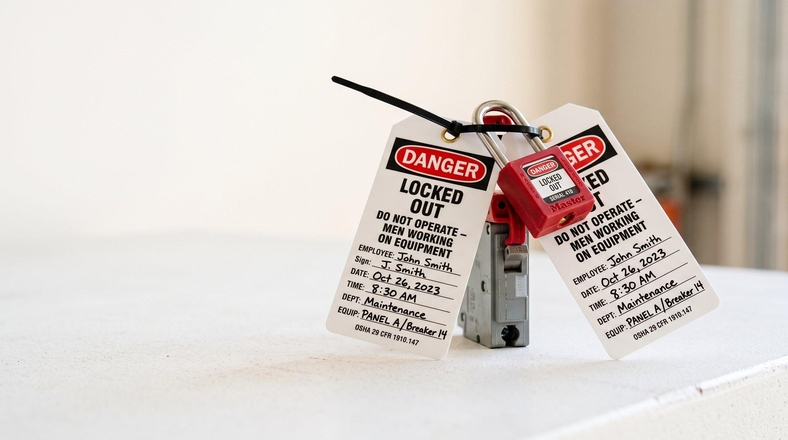
Electrical Lockout Tags: OSHA Compliance, Best Practices, and Accident Prevention
15 min read•For Thesafetyfactory.com Electrical hazards are unforgiving. In industrial environments, the unexpected re-energization of equipment during maintenance or servicing can cause severe burns, electrocution, and fatalities — outcomes that are entirely preventable when proper hazardous energy control procedures are in place. Yet lockout/tagout violations continue to appear among OSHA's most frequently cited standards in general industry, year after year. That gap between regulatory re
continue reading
7 Best Practices for Using Lockout Tagout Tags Effectively in the Workplace
15 min read•For Thesafetyfactory.com Every year, workers are seriously injured or killed because energy-isolating procedures break down at the critical moment when equipment is being serviced or maintained. Lockout tagout (LOTO) programs exist to prevent exactly that, and the lockout tagout tag is the visible, on-the-ground signal that tells every worker: this equipment is off-limits until the authorized person says otherwise. But having tags on hand isn't enough. Poorly chosen tags, inconsist
continue reading
7 Best Practices for Using Electrical Warning Tags in the Workplace
15 min read•For Thesafetyfactory.com Electrical hazards remain among the most serious risks in industrial and commercial workplaces. Whether you're managing a manufacturing facility, overseeing maintenance operations, or coordinating a shutdown procedure, electrical warning tags are a frontline defence. They communicate critical hazard information to anyone who approaches energised or de-energised equipment, serving as a visible signal that something requires attention before anyone touches a
continue reading
4 Best Fire Equipment Tags for Workplace Safety Compliance in 2026
9 min read•For Thesafetyfactory.com Fire equipment tags are a frontline compliance tool for any facility that relies on extinguishers, hose reels, suppression systems, or emergency response gear. Without clear, durable tags, inspection records go missing, equipment status becomes unclear, and your site risks failing audits or, worse, deploying faulty equipment in an actual emergency. This guide covers the best fire equipment tags available in 2026, evaluated on durability, compliance readiness
continue reading
How to Use Lock Out Tags with Pictures: A Step-by-Step Guide for Workplace Safety
16 min read•For Thesafetyfactory.com Lockout/tagout procedures are among the most critical safety protocols in any facility. When energy sources are not properly controlled during maintenance or servicing, workers face serious risk of injury from unexpected equipment startup or the sudden release of stored energy. Lock out tags with pictures take standard LOTO compliance a step further, combining written warnings with visual symbols that communicate danger instantly, regardless of a worker's l

How to Use Railroad Blue Flag Signs: A Step-by-Step Compliance Guide
16 min read•For Thesafetyfactory.com Railroad blue flag signs are one of the most critical safety devices in rail yard and maintenance operations. Their purpose is straightforward: when a blue flag is displayed on or near a piece of railroad equipment, that equipment must not be moved under any circumstances. Workers performing maintenance, inspections, or repairs depend on this signal for their lives. Despite the simplicity of the concept, proper blue flag protection requires a deliberate, se
continue reading

Railroad Blue Flag Signs: What They Mean and Why They Save Lives
Explainerrailroad blue flag signs 15 min read•For Thesafetyfactory.com Picture this: a maintenance crew is deep in the work of inspecting the underside of a railcar. Tools are out, workers are positioned beneath the equipment, and the job is going smoothly. Then, without warning, a locomotive couples to the far end of the train. The cars lurch. The consequences are unthinkable. This is not a hypothetical worst-case scenario. It is the exact type of incident that railroad blue flag signs exist
continue reading
7 Best Practices for Using Lockout Tags with Pictures to Enhance Workplace Safety
18 min read•For Thesafetyfactory.com Every year, improper lockout/tagout procedures contribute to thousands of workplace injuries and hundreds of deaths. When a maintenance technician approaches equipment that's been locked out, they need immediate, unmistakable answers: Who applied this lockout? Are they authorized? Is this device genuinely under their control? In facilities with diverse workforces, high contractor traffic, or multiple shifts, text-based identification creates dangerous ambig
continue reading
What Your OSHA Compliance Safety Tag Supplier Should Deliver: A Complete Buyer's Guide
14 min read•For Thesafetyfactory.com The facility manager's stomach dropped as the OSHA inspector held up a faded lockout tag, squinting at text that had become nearly illegible after months of exposure to machine oil and temperature fluctuations. "I can't read the warning message," the inspector noted, documenting yet another violation. What started as a routine compliance check was turning into a costly lesson: the bargain safety tags purchased six months earlier weren't just inadequate—th
continue reading
7 Proven Strategies for Maintaining OSHA Compliant Tags in Your Workplace
16 min read•For Thesafetyfactory.com A maintenance supervisor walks the production floor on a Tuesday morning and spots a faded yellow tag barely clinging to a piece of equipment. The text has become illegible from chemical exposure, the attachment point has corroded, and nobody can remember when it was placed there or what specific hazard it was meant to identify. This scenario plays out in facilities across the country, and it represents more than just a paperwork problem. Improper tagging r
continue reading
7 Essential Strategies for Effective Railroad Blue Flag Sign Implementation
15 min read•For Thesafetyfactory.com When maintenance crews work on railroad equipment, their safety depends on one critical visual warning: the blue flag. This simple yet powerful signal tells everyone in the rail yard that workers are on, under, or between rolling equipment—and that equipment must remain absolutely stationary. Yet despite its straightforward purpose, blue flag protection fails when organizations treat it as just another sign to hang up rather than a comprehensive safety sy
continue reading
7 Essential Railroad Blue Flag Safety Strategies Every Rail Yard Must Implement
19 min read•For Thesafetyfactory.com Every day in rail yards across America, maintenance crews work beneath, around, and inside railroad equipment that could move at any moment. A single miscommunication, a forgotten procedure, or a rushed decision can turn routine maintenance into tragedy. The blue flag system exists to prevent exactly these scenarios—providing a universally understood visual signal that workers are present and equipment movement is absolutely prohibited. When properly impl
continue reading
7 Essential Blue Flag Protection Strategies to Safeguard Railroad and Industrial Workers
16 min read•For Thesafetyfactory.com Every year, workers in railroad yards, rail-served warehouses, and industrial maintenance facilities face one of the most preventable hazards in the industry: rolling stock that moves when it shouldn't. Blue flag protection exists precisely to stop that from happening. It is a federally mandated safety protocol requiring that blue signals (flags by day, lights by night) be displayed whenever workers are on, under, or between railcars, locomotives, or heavy
continue reading
What LOTO Equipment Does The Safety Factory Offer? Your Complete Guide to Lockout Tagout Solutions
ExplainerLOTO equipment does The Safety Factory 13 min read•For Thesafetyfactory.com Picture this: A maintenance technician reaches to restart a machine, unaware that a colleague is inside performing repairs. In that split second, a life hangs in the balance. This scenario plays out in facilities across the country, but it doesn't have to. Lockout tagout procedures—when properly implemented with the right equipment—create an impenetrable barrier between workers and hazardous energy sources
continue reading
IdescoSafety.com is Now Known as TheSafetyFactory.com: Same Trusted Safety Expertise, Fresh New Identity
Explainer IdescoSafety.com is now known as TheSafetyFactory.com If you've been ordering safety equipment from IdescoSafety.com, you'll notice something different the next time you visit our website. The URL has changed, the logo looks fresh, and our name has evolved. But before you wonder what happened to the company you've trusted for years, let us put your mind at ease: we're still the same team, still manufacturing the same high-quality safety products.
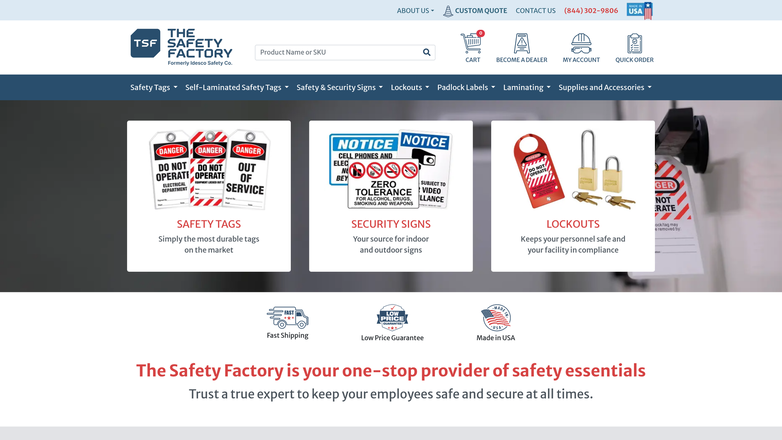
8 Best Lockout Tagout Safety Tags and Devices for OSHA Compliance in 2026
Proper lockout tagout procedures with OSHA-compliant safety tags and lockout devices are essential to prevent catastrophic injuries from unexpected equipment energization during maintenance. This guide reviews the 8 best "Do Not Operate" safety tags and LOTO devices from trusted manufacturers like Idesco Safety and The Safety Factory that meet OSHA 29 CFR 1910.147 standards, helping facility managers and maintenance professionals select durable, reliable equipment that keeps workers protected and ensures regulatory compliance in 2026.
What LOTO Equipment Does The Safety Factory Offer? Your Complete Guide to Lockout Tagout Solutions
Picture this: A maintenance technician reaches to restart a machine, unaware that a colleague is inside performing repairs. In that split second, a life hangs in the balance. This scenario plays out in facilities across the country, but it doesn't have to. Lockout tagout procedures—when properly implemented with the right equipment—create an impenetrable barrier between workers and hazardous energy sources. For over 80 years, The Safety Factory has stoo
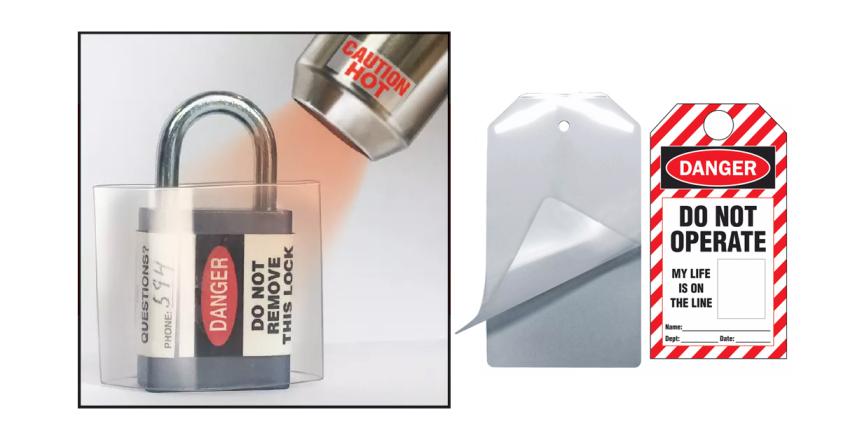
Introducing our DIY Photo ID and Safety Labels
The ultimate solution for OSHA compliance and workplace safety. Designed to meet OSHA guidelines, these all-purpose safety tags are essential for businesses that prioritize employee well-being and regulatory compliance.
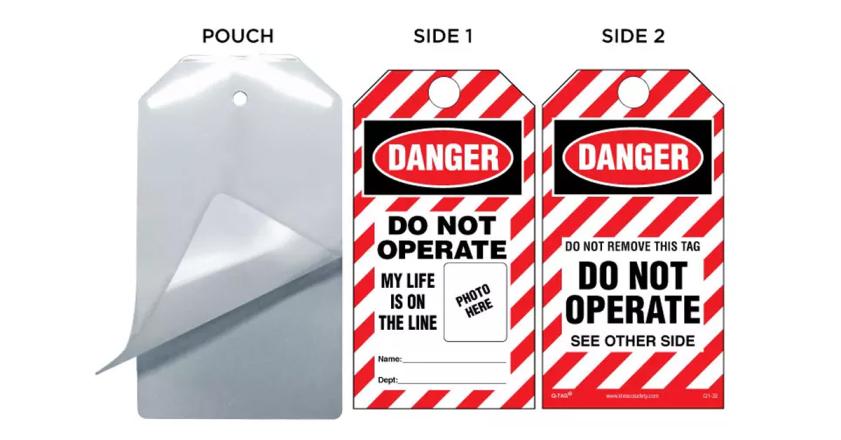
Boost Safety Compliance with Osha Self Laminating Safety Tags
Boost Safety Compliance with OSHA-Approved Self-Laminating Safety Tags
OSHA Top Citied Standards
Occupational Safety and Health Administration (OSHA), the top 10 most frequently cited standards
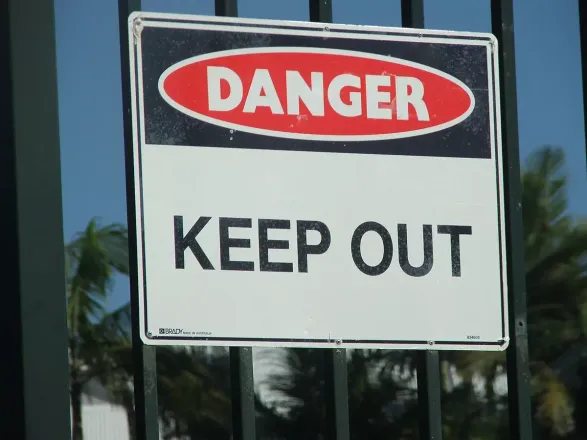
American Made Hazardous Material Signage for the Great American Worker
By the time an employee feels the burn of a corrosive material or inhale the first gasp of noxious fumes, it is too late. As an employer it is your responsibility to look out for the welfare of your employees, and when an injury occurs the moment to take proper precautions has passed. More often than not, workplace injury debriefings typically reveal something both an employer and employee could have done better to prevent the injury. Lessons learned are applied to the future. What you do not want to see in an injury debriefing is that you as the employer failed to take the most basic precaution available.
continue reading

Preparing for the Worker Injury is Leadership at it’s Finest
When a worker becomes injured at work, it is easy for panic to become commonplace. That’s panic among the frontline employees who may have witnessed the injury as well as panic among leadership who have a natural obligation to do something. Not to mention, the injured employee has a reasonable right to a certain amount of panic themselves. That’s why leaders have to be prepared for the worst, though they work diligently to prevent worker injury. That’s why adding appropriate signage to warn of danger as well as direct panicked employees towards life saving equipment is essential. The “fog of war” as they call it can cloud the mind and make otherwise normal decisions very difficult. By adding a little signage, you can cut through the fog and potentially save another’s life.
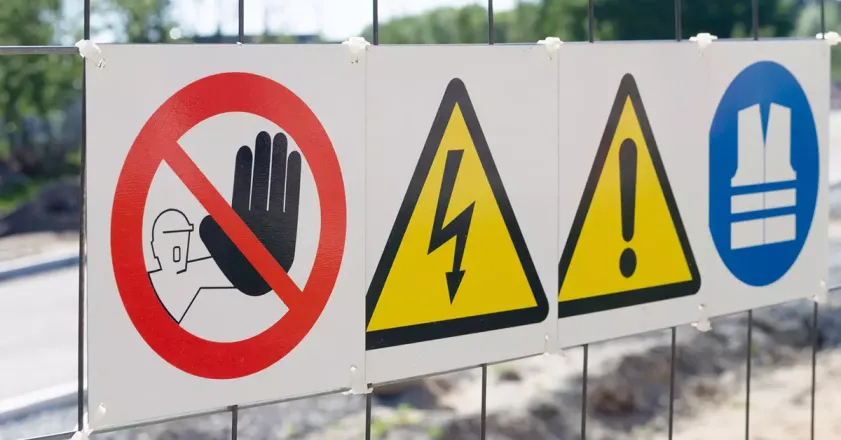
Looking Out for Your Employees with Personal Protection Signage
It can often be said that a good process will save your best employee on their worst day. All employees make mistakes with some just heading down that road a little more often than others. Many times the patterns of behavior exhibited by the troublesome staff are clear reasons for termination. However, what does an organization do when one of your stellar employees makes a costly decision that puts both life and profit at risk?
continue reading
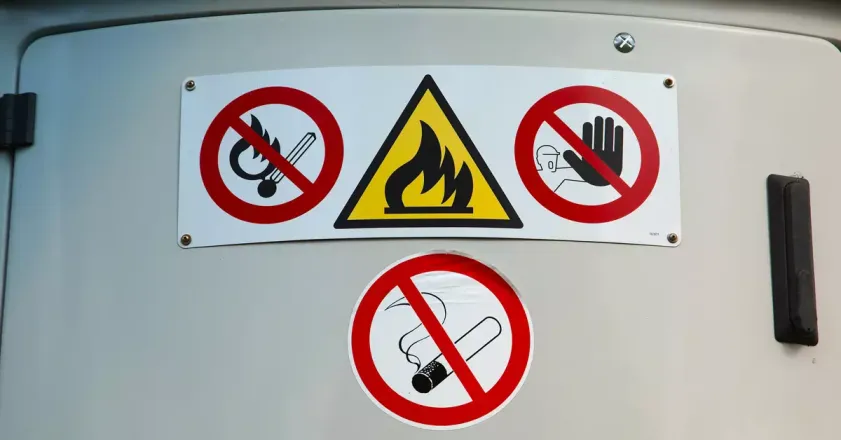
Finding a Safety Sign for Every Season in the Workplace
It has long been said that there is a time and a season for everything that takes place under the sun. A time to plant and a time to reap. A season to labor and a season to rest. Fortunately for the great American worker, we spend our time trying to envision every season of danger that might threaten the workplace. The threats are many and they come in a variety of different forms. Fire, electricity, water, chemicals and good old fashioned machinery in action hold the potential to cause great harm. That’s why appropriate signage can serve as the first line of defense when a lack of training or common sense comes into play. It might sound simple, but don’t underestimate the value a good sign in the right place at the right time.
continue reading
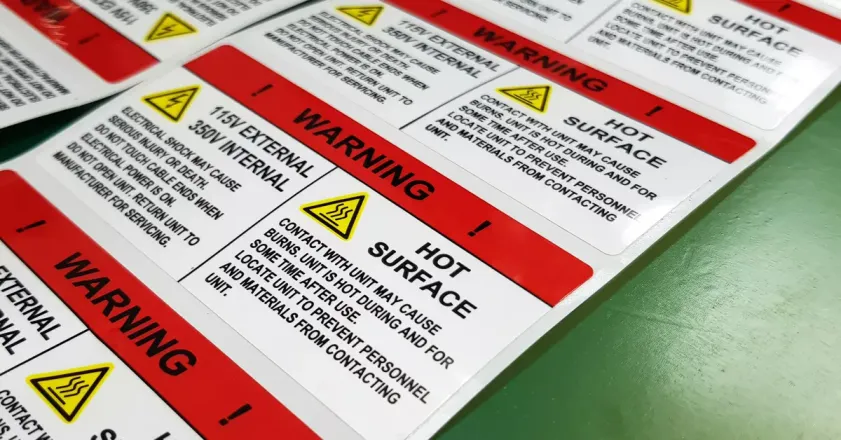
Why Protecting Your Employees is a Leader’s First Priority
The United States Marine Corps has two leadership principles that guide its operations. Ranked first and taught to all leaders is “mission accomplishment.” This, above all other priorities, is to be pursued. That’s why Marines storm the beaches of Iwo Jima or slug away from house to house in the streets of Fallujah.
continue reading
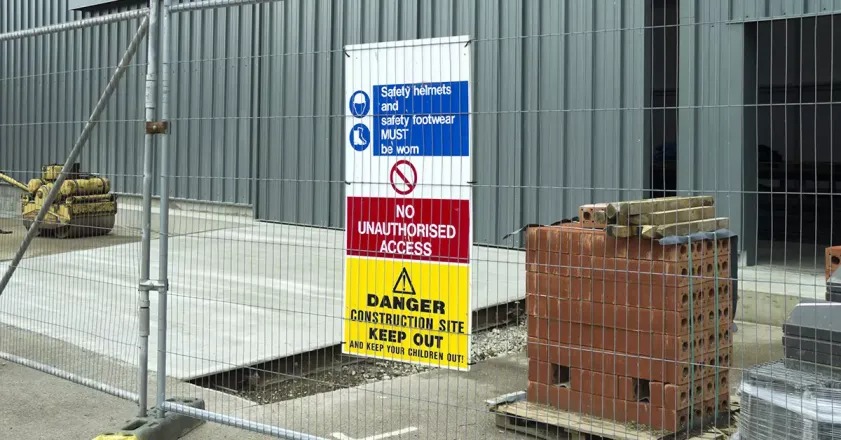
Find the Right Workplace Sign for Every Setting under the Sun
Not every measure of good judgement in the workplace has to be dictated by OSHA. There are times when a good measure of common sense would do just fine and as such, OSHA doesn’t dictate every action under the sun when it comes to the workplace. That’s why we have a huge demand for workplace signage that speaks to the commonsense needs around you every day. One of the biggest needs facing the workplace revolve around simply keeping the earth a little greener each day.
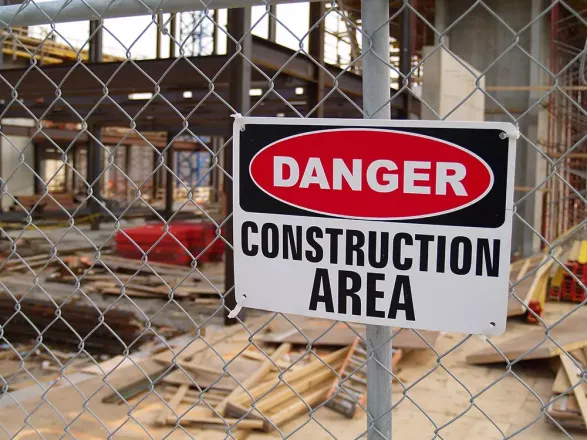
There is No Such Thing as “Too Safe” in the Workplace
There are two types of industrial workplaces when it comes to safety. There are those who look at the OSHA guidelines and think to themselves, “good enough.” Then, there are those who look at their employees, their families and the future ahead of them and think, “not good enough” when it comes to their safety. Beyond a legal obligation enforced by OSHA, good employers have a moral obligation to do everything in their power to send their workers home in one piece at the end of a shift. That’s why personal protection required signs matter. They matter because the lives of your employees matter and there is no such thing as “too safe” in the workplace.
continue reading
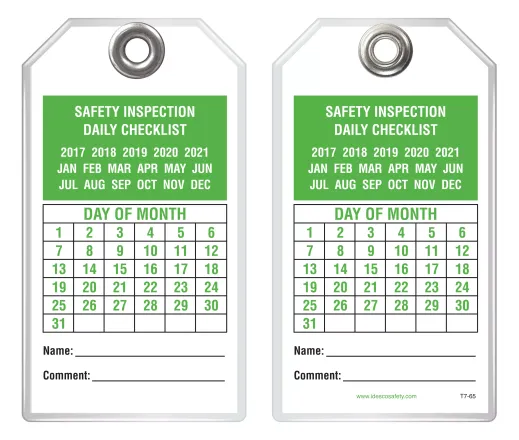
An Operational Safety Tag for Every Danger Under the Sun
Each industry comes with it an implicit list of dangers that have in times past caused bodily harm and even death. Fortunately for the modern American worker, we have the ability to learn from these past mistakes and take every effort to mitigate risk going forward. Not to mention the fact that OSHA demands we do and running afoul of OSHA is a less than pleasant affair. Seizing upon these past lessons, we here at The Safety Factory have created pre-written operational safety tags for just about every danger under the sun.
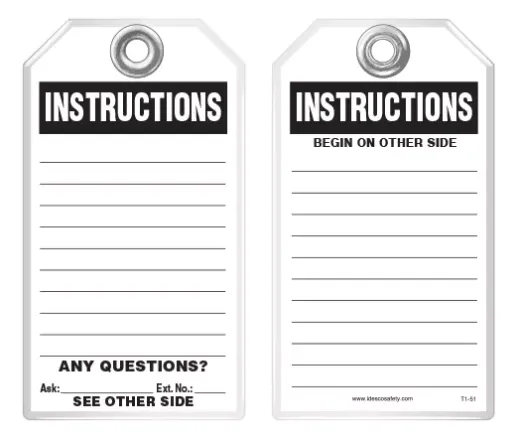
Protecting Your Employees from Unforseen Threats with All Purpose Safety Tags
The modern American workforce has done a pretty good job of predicting and addressing the most common threats to worker safety. Certainly accidents happen and in some industries they are more prevalent than others. That being said, the past 100 years has been virtual revolution for worker safety. The Occupational Safety and Health Act of 1970 created the Occupational Safety and Health Administration for the expressed purpose “to save lives, prevent injuries and protect the health of America’s workers.” OSHA, as the are more commonly called, is serious about its mission. To run afoul of OSHA as an employer is to gift yourself a really bad day. However, to watch one of your employees suffer injury that could have been prevented is the worst. You know about many of the threats facing your team and yet, it is the threats you have yet to foresee that keep you up at night.
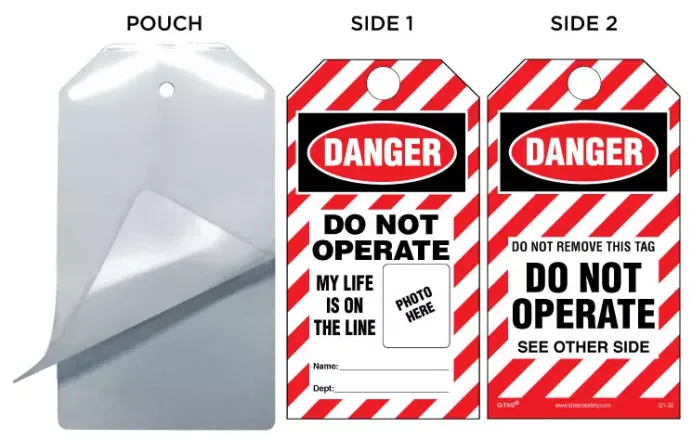
Making Your Own OSHA Standard Lockout Tags has Never Been Easier
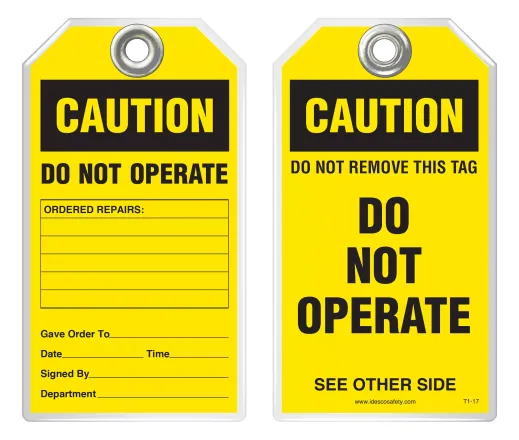
There are a few rules in business and industry that are golden mantras to live by. First, the pursuit of profit is always a noble venture. Second, pursuing that profit at the expense of angering OSHA is never worth it. If there were a mantra that trumped both of prior, it would be that unnecessarily risking the live of your employees in the pursuit of profit is never worth it. There are risky jobs, to be sure, but casually treating employee safety like another line item expenditure has both moral and business implications. Here at The Safety Factory, we’ve made both the business decisions the passionate American entrepreneur has to make and the safety of our fellow Americans paramount. There is an economical way to ensure that a machine isn’t charged with energy when lives are at the risk and that also makes OSHA happy. Introducing the Peel-N-Stick P-Tag and the Self-Laminated Q-Tag.
Utilizing the Beautifully Simple and Safe Padlock Label
It is a general rule of thumb when working in a hazardous environment that “what OSHA wants OSHA gets.” It is not that industry of any sort loves government influence and wakes up hoping for a new set of regulations in the workplace. Rather, it is that there is little benefit worth drawing the ire of OSHA and when it comes to the safety of your employees you can never go too far. That’s why if you haven’t picked up padlock labels yet for your organization, then now is the time to do so. OSHA requires that lockout devices be standardized within the facility in at least one of the following criteria: color; shape; or size. That is to say than any employee would immediately recognize this particular lock as it is used for no other purpose at the facility. Thankfully for your organization, we’ve got you covered with some beautifully designed simple and safe options for padlock labels.
From Magnets to Mirrors: Making Your Workplace Safe Again
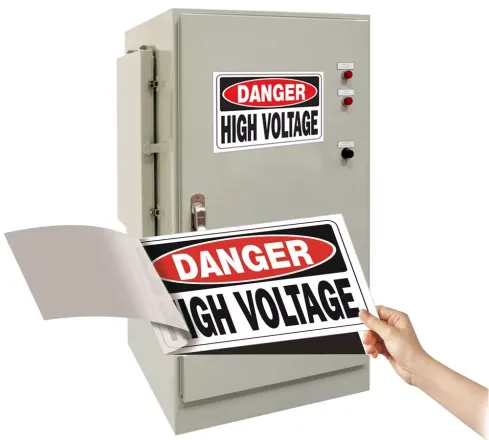
In the field of industry, there is a phenomenon known as practical drift. Policy dictates a process be completed a certain way, but on the front line where the real work is done employees tend to show new employees a “better way.” What happens then is that real time operations deviate from established safety protocols and the scope of the problem is only discovered after a tragic accident. Sadly, it is an accident that could have been avoided had managers not assumed policy and protocol was being followed on the front lines. If you fear that might be your organization, then take a look at two of the most commonly overlooked safety feature solutions we offer. From magnets to mirrors, we’ll show you what it takes to make your workplace safe again.
Keep OSHA Happy and Your Employees Safe with Professional Padlocks
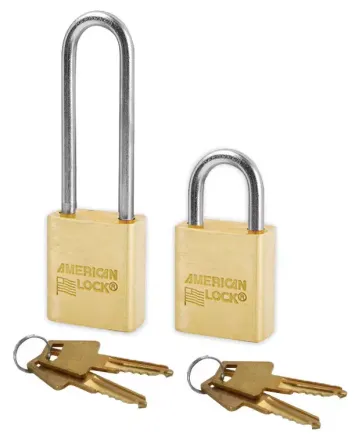
It might seem like a simple tool, but the trusty padlock has worked to keep persons in or out since the 19th century. Technology and metallurgy has come a long way since then, but the simple premise hasn’t changed. That’s why when OSHA requires padlocks to keep machinery from being engaged or activated during routine maintenance and repair they have little tolerance for those who don’t comply. There is simply no excuse to put your employees at risk in the mind of OSHA and certainly not when padlocks come in all varieties for prices that hardly put a dent in the corporate budget. So if you have been tasked with securing your organization’s safety equipment, then let’s not be distracted by YouTube or Twitter and get this job done right shall we. Here’s how to keep OSHA happy and your employees safe with simple, professional, and affordable padlocks.
Save Your Employees and Your Brand with OSHA Compliant Lockouts
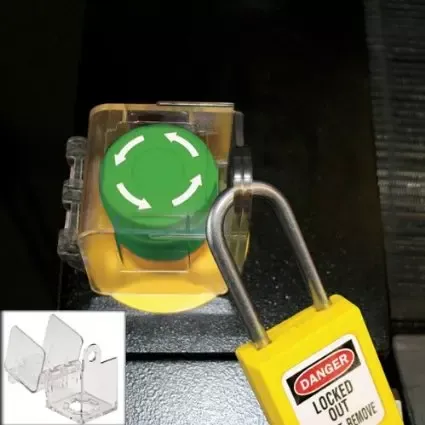
Currently there exists a show in circulation titled, “Hard to Kill”, which profiles some of America’s most deadliest jobs. Hosted by Army Special Forces Veteran Tim Kennedy, he tackles these deadly occupations head on and likely with a great deal of technical and safety support around him. There is no doubt a hefty insurance policy in place and should the worst come to pass the network would likely just cash out and cancel the show. If you are in charge of your organization’s safety compliance then you likely don’t have such an easy out. Your company employees countless individuals whose livelihoods depend on the organization’s existence. Not to mention, for the employee irreparably harmed or worse killed in the line of duty there is no backup plan. Safety compliance officers who skip OSHA corners harm people and destroy brands. The OSHA compliant lockout is the one simple tool that can save your best employees on their worst day.
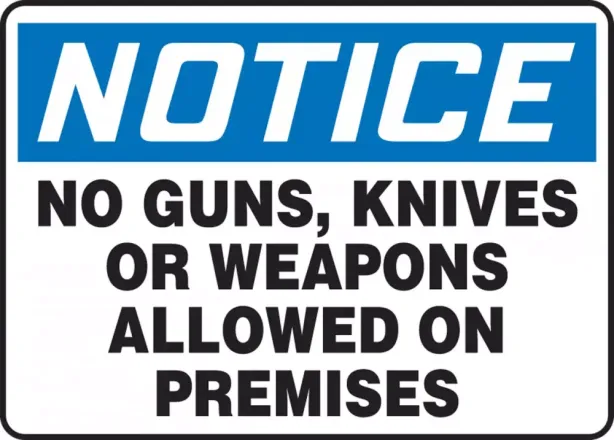
Invest in Some Common Sense with Safety and Security Signs
There is an unspoken contract one has with mayhem when it comes to investing in the safety and security and those around you. Namely, pay me now or pay me later, but you will pay me. If you are trying to save a few bucks by forfeiting your responsibility to post some common sense signage for the day mayhem shows up at your workplace or school then you will pay big. Not to mention a great deal of safety and security signage is required by the federal government who won’t mind dropping a big fine on you as well. Posting appropriate signage to warn of dangers or direct others to safety is one of the most common sense safety measures an organization can take. If that’s your responsibility then don’t fret. We’ve got you covered with just about any sign you can imagine.

How Do I Improve Facility Safety with Proper Security Signage?
When launching a business, you want to make sure your customers know you take their safety and security seriously. Especially after the past few year's Pulse Nightclub shooting, London Bridge violence and San Bernadino workplace bloodshed, the increase of violence has people on edge. When walking onto my daughter's school campus, I now take note of signs indicating I need to sign in at the office, and I sleep more soundly knowing safety procedures are in place. Just last weekend, my family and I visited the US National Whitewater Center, and our visit was smooth, should I even dare to say - it flowed well (pun intended) because of the signage. We knew where to go, that weapons of any kind were not allowed (and they checked bags too), but unlike our recent theatre experience, cameras and cell phones were permitted, even encouraged if they were waterproof!
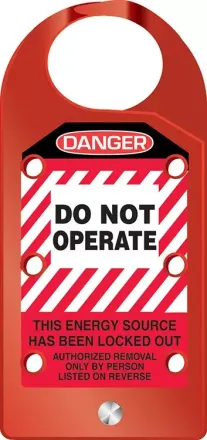
How to Keep Your Construction Site and Workplace Facility Safe and Secure with Lockouts
Safety and security are of the utmost importance at construction sites and workplace facilities. It’s vitally important to be avoid accidental injuries and fatalities, as well as to be in compliance with OSHA regulations. For these reasons, it’s critical to have the most reliable, durable and re-usable lockout devices to protect electrical boxes, cabinets, and machinery, and prevent dangerous unintentional equipment start-up. Here is an overview of lockout equipment that you can utilize to make your job site or facility safe and secure.
continue reading
A high-quality lockout hasp is both safe and versatile, allowing you to use one or several padlocks to secure all types of machines, electrical panels, breaker boxes, and other electrical sources. The hasp should exceed OSHA requirements, should not open until every padlock is removed, and must be rugged enough to withstand corrosive and harsh industrial environments. For example, the Danger - Do Not Operate Hasp has a scissor-style closure and is made from high-strength aluminum, while the danger tag alerts workers to a hazardous situation.
What are Some Key Guidelines for Correct Safety Signage in the Workplace?
Imagine this scenario: A worker is badly injured on your job site. Not only is this a tragic event for the worker and his or her family, it’s also a huge risk for a lawsuit that could have debilitating fiscal ramifications for your company.
Fortunately, correctly designed signage can go a long way toward preventing injury and even death in the workplace. But how can you know that the signs you are posting are compliant with the standards set by Occupational Safety & Health Administration (OSHA) and the American National Standards Institute (ANSI)? Here’s how to be sure that the safety signage you are posting is doing its utmost to help prevent injury or death:

Durable Security Signs Offer Clear Notices and Convenience
Workplace, industrial, transportation, commercial, and public-space security is increasingly important in our complex world. Highly mobile societies and international commerce move quickly and depend on security standards and communication that enable public safety, sound commercial relations, efficiency, and reliability. Properly and clearly communicating about workplace and public-space security rules, standards, permissions, requirements, etc. is a subject for regulatory agencies worldwide. It’s also – for better or worse – a subject of intense lawyer-class scrutiny.
continue reading
A Sign Can Save Lives
Going out to a nightclub is supposed to be an occasion of joyful celebration, full of the promise of meeting new people, dancing, laughing and blowing off some steam with friends. However, in the aftermath of the shooting at the Pulse Nightclub in Orlando, Florida, what began as a night of fun ended in tragedy.
Sadly, the last century has seen some of the deadliest nightclub and assembly fires known to man. Many were the result of attendees getting trapped inside of buildings where they were gathered to hear music and socialize during the prohibition and post prohibition era. The deadliest of these disasters was the fire at Boston’s Cocoanut Grove Theater –the second worst single building fire in American history (second only to the Iroquois Theatre fire). The space was over its authorized capacity by 32 people, and they all lost their lives to the deadly blaze. The enormity of the event was so shocking that it briefly replaced the news of World War II in papers, and it led to a reform of safety standards and codes across the country.
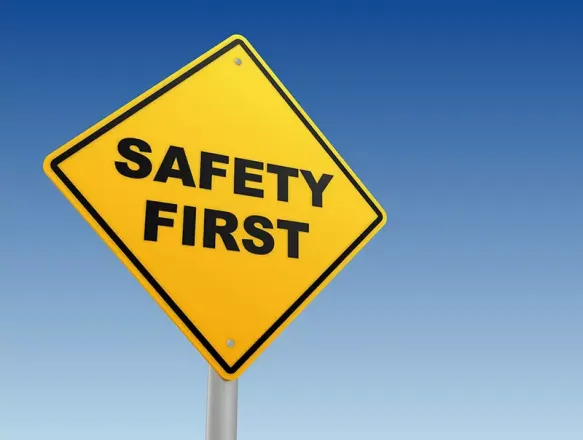
5 Types of Signs and How They Improve Workplace Safety
Safety signs may be considered one of the most basic and fundamental forms of safety equipment. For over 100 years, safety signs have been encouraged or required in specific parts of the workplace, spelled out in the primary language(s) of the workers. They save thousands of lives every year and continue to play an important role in preventing injuries in the workplace.
In 1941, standards for safety signs were introduced by the American Standards Association (later to become ANSI). These standards introduced formats for DANGER, CAUTION, NOTICE, and EXIT signs, to name a few. While many aspects of those early standards still hold today, globalization now has more of an effect. In 2007, ANSI published guidelines that coordinated with ISO label formats, ushering in a new era of global best practices in safety signs for the workplace.
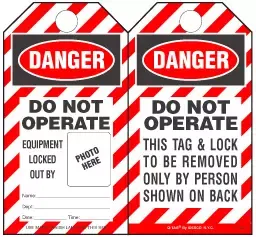
Self-Laminated Safety Tags Offer Compliance Convenience
Workplace, industrial, transportation, and commercial safety is a big deal these days. The wheels of international commerce are greased with safety standards that enable efficiency, reliability, and sound commercial relations. Properly marking equipment, chemicals and hazardous materials is a subject closely regulated by the U.S. Occupational Safety and Health Administration (OSHA), conventions like the Globally Harmonized System of Classification and Labeling of Chemicals (GHS), and other regulatory agencies across the globe—not to mention being the subject of intense scrutiny by the lawyer class.
continue reading
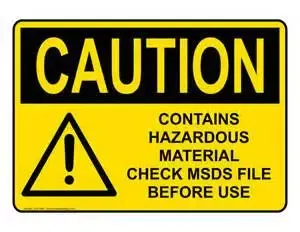
The Global Harmonization Code
The Globally
Harmonized System of Classification and Labeling of Chemicals (GHS) were
designed to standardize the critically important method of shipping hazardous
toxins throughout the world. Many countries have had their own regulatory
system for classifying and labeling. However, what one country may classify a
chemical as “somewhat toxic” another country may classify the same chemical as
“very toxic.” And a third country may classify that very same chemical as “benign.”
Chemicals involved in shipping include Physical Hazards – chemicals with
explosive properties, flammables, oxidizers, corrosives and gases. Other types
in include chemicals that are considered Health Hazards. They include chemicals
that cause burns, effect breathing or those that lead to organ damage and
cancer. And there are chemicals that can affect the environment. With each
country developing their own classifications for these types of chemicals, it
is easy to see how it is dangerous and virtually impossible it is for each
country to be sure of how each chemical being imported to their country
actually fits into their own standards. With this new Global system, each
country that signs off to the program will have the same classifications for
each and every chemical they import and export.

Laminating Pouches for Home and Business
Important Documents must be protected if they are to maintain their integrity for any length of time. It could be a Driver’s License, an identification badge, a birth certificate, an award, a legal document, a photo, a menu or piece of art. In order to protect it properly and be assured that it will last indefinitely, it should be laminated. Once a document is laminated, there is no worry that an inadvertent spill of water or other liquid will ruin the document. A child’s crayon will not be able to leave a mark. The document will not be accidently folded. Photos of loved ones will remain as good as new as you review them over many years. Menus in your restaurant can be used over and over and over again. Legal documents will not tear or wrinkle. Identification cards remain legible and valid in your wallet.
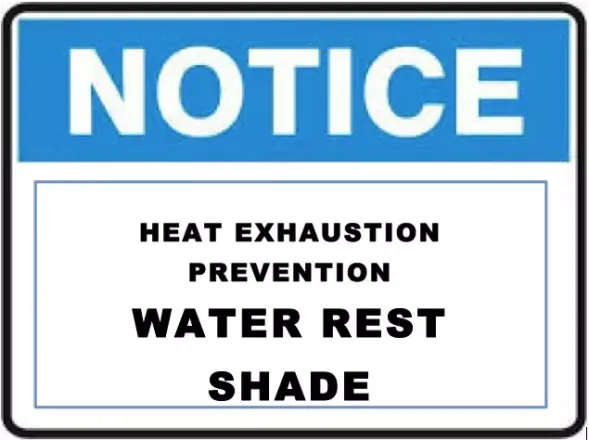
Heat Related Worker Illness
Since 2008 there have been 107 Heat-Related Deaths in the
continental United States. Each year there are thousands of heat-related
illnesses. That is why OSHA has developed a Nationwide Heat Illness Campaign
designed to raise awareness to both employers and employees about the dangers
of working in heat and hot weather. Those most affected by the heat include but
are in no way limited to the in the construction trade, utilities, agriculture
and oil and gas exploration. New employees, temporary employees and those
returning to work after a period of time off are especially vulnerable to the
heat as it takes some time to build up a tolerance to it.
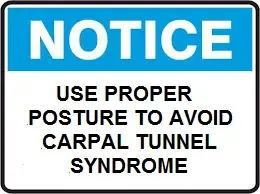
Carpal Tunnel Syndrome
When excessive continuous pressure is placed on the medium nerve, the nerve that allows feeling to parts of the hand, the condition known as Carpal Tunnel Syndrome develops. The primary symptom of Carpal Tunnel Syndrome (CTS) is numbness of the thumb, index finger and ring finger. When one bends a wrist forward for any length of time and feels pain it is a sure sign that CPS is present. The Occupational Safety and Health Administration (OSHA) have identified work related repetitive tasks, force, posture and vibration as major causes of CTS. A recent study showed that there is in many instances, a greater risk for CTS to affect worker production, than basic physical factors such as obesity. It should be noted that similar injuries caused by falls, slips, motor vehicle accidents or other similar accidents are not recognized as work-related causes of CTS by OSHA.
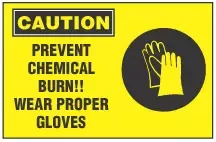
Severe Burns in the Workplace
On average there are over 200 deaths and over 5,000 injuries caused by fires, electrical and chemical burns, radiation, scalding water and explosions in the workplace every year. Fires can be caused by accidents at industrial food preparation ovens, overheated and shorted out wiring, from welding mishaps, spills and leaks of sulfuric acid, hydrofluoric acid, strong bases such as sodium hydroxide and ammonia and burns from scalding hot water.
Employers should have trained personnel on site at all times who know how to identify and treat both minor burns and serious burns. The epidermis is the outer layer of the skin. The dermis is the inner layer of the skin. First degree burns affect only the epidermis. Symptoms involve a very red and painful burn. Second degree burns involve the entire epidermis and upper layer of the dermis. Blisters are usually present, the wound is pink, wet in appearance and very painful. A Third degree burn involves all layers of skin being destroyed and the fatty tissue known as the subcutaneous tissue, under the skin. In a fourth degree burns all layers of skin and muscle and bone are affected.
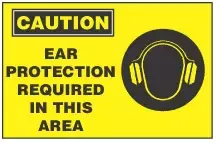
Noise Related Hearing Loss In The Workplace
Government regulations and in-house safety rules have really concentrated on the prevention of physical harm to employees. We generally think of injuries in the workplace as falling into the categories of slips and falls, injuries to eyes and inhalation of dust and chemical vapors to name a few. However, actually it is noise-related hearing loss that is listed as one of the most prevalent occupational concerns for many years. It has been reported than in the past 10 years, nearly 125,000 workers have suffered permanent hearing loss.
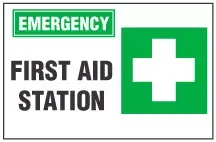
First-Aid Practices In The Workplace
The Occupational Health Admiration (OSHA) states that First-Aid is any one-time treatment along with a follow-up treatment dealing with minor scratches, cuts, burns, splinters and other minor industrial injury that may occur during the average work day. According to CFR 1910.151 “The employer shall ensure the ready availability of medical personnel for advice and consultation on matters of plant health.” Generally first-aid treatments are simple and require little technology. However, assuming there is no infirmary on site, there must be at least one person, preferably more, who are trained to provide first aid. A workplace must also provide facilities and equipment for treating the eyes and body should an employee be injured by coming into contact with corrosive material. Along with these basic first-aid requirements, a number of OSHA standards require training in cardiopulmonary resuscitation (CPR.)
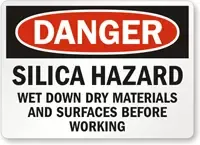
The Dangers of Silica Inhalation
It takes just a
very small amount of inhalation of crystalline silica particles to cause
serious problems to plant workers. Initial symptoms include but are not limited
to shortness of breath, weakness and weight loss. Many cases of Silicosis can be shown to eventually
lead to lung cancer, pulmonary and kidney disease. Crystalline silica is found in virtually every
type of industrial environments. The largest areas of exposures are caused by the
everyday factory operations such as abrasive blasting, cement and brick
manufacturing, asphalt pavement manufacturing, china and ceramic manufacturing
and the tool and die industries. In addition, the manufacturing of adhesives,
paints, soaps and glass are made with crystalline silica.
Fork Lift Safety
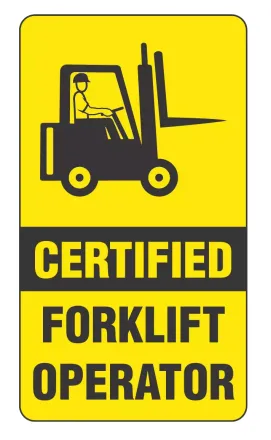
Fork Lift Trucks are used to raise, lower or move large objects or several smaller objects at the same time. They can be driven by an operator or mechanically controlled. In either case, identifying the hazards of moving heavy materials in this manner is of prime importance.
When heavy objects are moved from place to place, there is the possibility of at least some of the objects falling off the forklift. And as the objects can be well off the ground in a fork lift truck, it can lead to a serious accident. There is also the possibility as with all moving vehicles that someone walking nearby can be hit by the fork lift. Also, the driver may inadvertently make a wrong turn and crash into a wall, equipment or even another vehicle.
The Importance of Ergonomics
June is National Safety Month and there are many things we can do as employers and employees.
In the workplace Ergonomics is an important key to safety. This month is a good time to identify and abate musculoskeletal disorders (MSDs.) These include strains, sprains and tears, inflammation, pinched nerves and spinal disc problems.
Thermoplastic Non-Conductive Padlocks
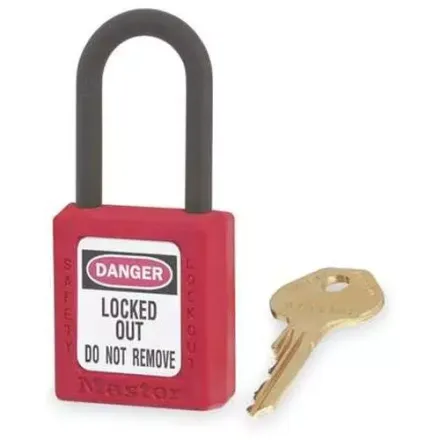
Thermoplastic padlocks are designed exclusively to satisfy CFR 1910.147 Lockout:Tagout regulations. They are durable, lightweight and are non-conductive. Thermoplastic is an excellent insulator preventing the flow of electricity. Static electric charges can remain in equipment even after the equipment has been shut down. Using thermoplastic padlocks for lockout:Tagout use means that the padlocks can be used around heat or electrical equipment with little concern that electronic sparking will occur. In addition, the key retaining feature insures the padlock will not remain unlocked. The key cannot be removed while the padlock is open. A very important fact when equipment is being repaired and lockout procedures are in place.
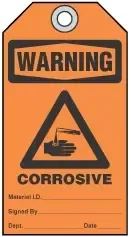
Chemical Hazards In The Workplace
The OSHA Regulation CFR1910.1200 “Toxic and Hazardous
Substances” is intended to address comprehensively the issue of classifying the
potential hazards of chemicals and communicating information concerning hazards
and appropriate protective measures to employees, and to preempt any
legislation or regulatory enactments of state, or political subdivision of a
state, pertaining to the subject.
Toxic Industrial chemicals are manufactured, stored,
transported and used throughout the world. They can be found in the form of
gas, liquid or solid state. The hazards they contain include carcinogens,
corrosives and reproductive hazards. Toxic chemicals can also be highly
flammable, combustible, explosive or reactive.
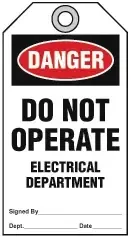
Electrical Safety In The Workplace
The Electrical
Safety Foundation International (EDFI) has designated May as National Electrical
Safety Month. On average, there are more than 300 deaths and over 4,000
injuries per year caused by Electrical Hazards in workplaces here in the United
States. Over 60% of the injuries are due to electric shock, the remainder
caused by electric burns. Electric shock is caused by either direct or indirect
contact with a conductive part that is energized. Electrical arcing, explosions
or fire result in burns. Toxic gases released as a result of fire as well as
the burning of electrical equipment often leads to severe illness or death.
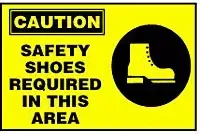
Protective Footwear
The Personal
Protective Equipment regulation, CFR 1910.136 has a very comprehensive set of
requirements when addressing employee’s foot protection. It states that “The
employer shall ensure that each affected employee uses protective footwear when
working in areas where there is a danger of foot injuries due to falling or
rolling objects piercing the sole, and where such employee’s feet are exposed
to electrical hazards. The ruling continues with the statement that protective
footwear must comply with The American Society for Testing and Material (ASTM)
regulation “Standard Specification for Performance Requirements for Protective
Footwear. And, by definition, that standard meets the qualifications
established by The American National Standards Institute (ANSI) regulation.
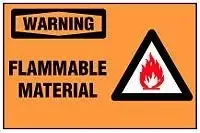
Hazardous Materials
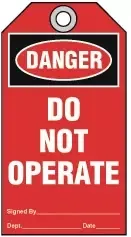
Hazardous Materials in the form of solids, liquids or gases can be a danger to all living things, property and our environment. Because they are used in the manufacture and the shipment of all types of products they are very closely regulated. Within the regulations are the specifications for the clear labeling of these materials to announce their presence and thus to avoid the possibility of injury or damage. Developed by The American National Standards Institute (ANSI), Hazardous Material Symbols have become the international standard involved in identification labeling. Each hazardous material has its own specific symbol, colors, borders and printed information to help readily identify the danger one may encounter when coming in contact it. Besides the ANSI standard, many federal, state and local laws as well as international laws require Hazardous materials to be identified. Here is a listing of some of the basic Hazardous Material Symbols:
Improving The Tracking of Workplace Injuries and Illnesses
Improving
The Tracking of Workplace Injuries and Illnesses
continue reading
According to The Occupational Health Administration (OSHA)
records, there were 4,383 workers killed on the job in 2012. This means that
there is an average of 3.2 workers who lost their lives for every 100,000 full
time workers. That works out to 84 per week or 12 deaths per day. The rate of
non-fatal occupational injury and illness cases requiring days away from work
to recover was 112 cases per 10,000 workers. The median days away from work
were 9 days. It has been estimated that the cost of productivity costs as well
as direct medical costs for these injuries totals 250 billion dollars per year.
According to The
National Institute for Occupational Safety and Health (NIOSH), preventing
work-related injuries and illnesses is part of a wise national strategy for
economic recovery and growth. Toward that goal, according to the Proposed rule
posted by The Federal Register, Doc NO. 2013-26711, here is the proposed rule:
“Improve Tracking of Workplace Injuries and Illnesses.”

Locking Out Valves During Maintenance
A number of various chemicals, hot or cold water as well as steam can cause serious injury to a worker performing maintenance. According to the OSHA regulation 1910.147, “The Control of Hazardous Energy” (Lockout/Tagout) all sources of energy to include, hydraulic, pneumatic, chemical and thermal must be locked out during a maintenance operation. To help satisfy that requirement, devices have been developed to insure that both liquids and gases are securely locked out.
ArcFlash
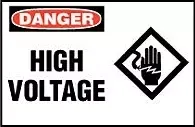
An arc flash occurs when electric current strays from the path designed for it and instead travels through air to another electrical conductor. The flash results in an uncontrolled voltage surge that can severely injure a person or persons in close proximity.
Unintended conductors include dust, tools, water, corrosion, faulty wiring to name a few. The arc flash can be responsible for fire, for burns, flying objects, extreme blast pressure, sound blast and heat. To protect against the possibility of arc flashes, the National Fire Protection Association has developed a series of four “Flash Approach Boundaries” to help limit the effects of the flash.
Self Laminating Safety or P-Tags
There are many many industrial situations where information has to be inputted onto an informational tag. For example, lockout:tagout procedures; maintenance order instructions; a specific valve number has to be added; right-to-know information, biohazard announcements, just to name a few. Often times the tag has to be written up immediately and placed in position. An ideal way to do this is with a Pressure-Sensitive tag or as The Safety Factory calls it – A “P-tag.” That is because the tag can easily have information added to it with either pen or pencil and can be sealed by simply removing the release paper from the pressure-sensitive adhesive. No heat-seal lamination is required.

Hard Hat Protection
Employer Safety is the most important concern on the job. And Hard hats play an important role in worker protection. They are a relatively inexpensive way to protect against serious injury. The Occupational Safety and Health Administration, OSHA has very strict regulations regarding the use of Hard Hats for employees. Typical employees who must wear hart hats include but are not limited to: carpenters, electricians, lineman, mechanic, plumbers, assembler’s sawyers, welders, laborers, freight handlers, timber cutters and loggers and warehouse personnel. CFR 1910 135 (a) (1) states that each affected employee shall wear protective helmets when working in areas where there is a potential for injury to the head from falling objects. Furthermore, 135 (a) (2) states that Protective helmets designed to reduce electrical shock hazard shall be worn by each such affected employee when near exposed electrical conductors which could contact the head.
Circuit Breaker Lockouts
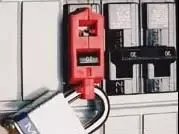
Within the OSHA Lockout:Tagout regulation, 1910.147 is this prominent paragraph: The Definition of an Energy Isolating Device: A mechanical device that physically prevents the transmission or release of energy, including but not limited to the following: A manually operated electrical circuit breaker; a disconnect switch; a manually operated switch by which the conductors of a circuit can be disconnected from all ungrounded supply conductors and, in addition no pole can be operated independently; a line valve; a block and any similar device used to block or isolate energy. Push buttons, selector switches and other control circuit type devices are not energy isolating devices. This has led to a myriad of circuit breaker lockout solutions. Factories throughout the United States, in fact the world, now have a variety of lockout solutions for their single pole and multi-pole circuit breakers.
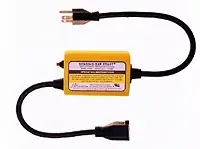
Preventing an automatic restart with safe start devices
Often times electrical equipment being used in a factory operation may suddenly shut down. This may be due to an internal power malfunction, a local power plant problem, a sudden jam in a gear, just to name a few. When this type of unintentional shut down takes place, it is extremely important to insure that the equipment does not suddenly start up again. Such an event may catch employees by surprise and lead to a serious accident. The Sensing Saf-Start device automatically “opens” the circuit once there is a sudden power loss. The circuit will remain “open” as long as the equipment power switch is “on.” Once the power switch is turned “off”, the Sensing Saf-Start device will then close the circuit. At that point, with everyone aware that the equipment can now be safely restarted, the power switch can be turned “on” and normal operation resumed.
continue reading

Lock Wrap Labels for Padlocks
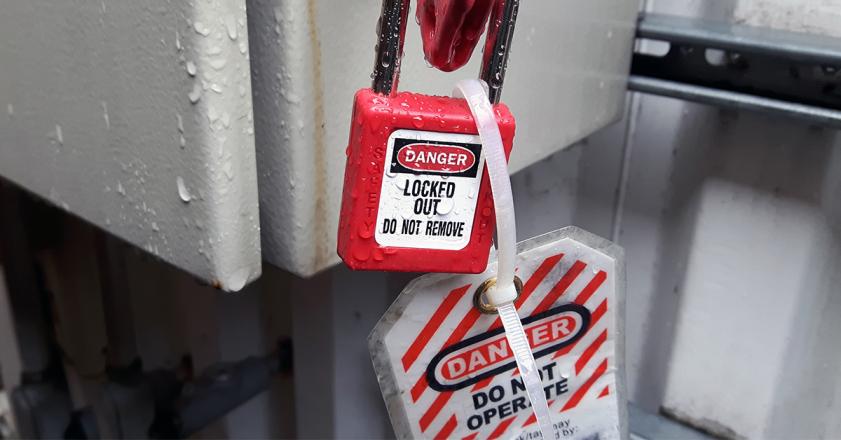
In September of 1989, The OSHA Lockout:Tagout Regulation CFR1910.147 went into effect. It clearly stated that equipment being serviced had to be completely shut down and had to be both "Locked Out" and "Tagged Out" (with the tag firmly attached to the lock) clearly identifying the person or persons involved in that servicing operation. Furthermore, to insure the tag could not inadvertently slip off, tear off or somehow be removed from the padlock, both the tag and the device used to attach it to the padlock had to be strong enough to "pull" 50 pounds. And thus, the LockWrap(R) Padlock Label was created. The LockWrap acts as a tag and is wrapped securely around the padlock and cannot be removed.
continue reading

Fuse Blockouts and Latchouts
Section (c) (5)(i) of Lockout Regulation CFR 1910.147 states that Locks, tags, chains, wedges, key blocks, adapter pins, self-locking fasteners, or other hardware shall be provided by the employer for isolating, securing or blocking of machines or equipment from energy sources. Fuse holders and fuse panels are types of energy systems that are difficult to lockout. In order to satisfy the OSHA rule, devices have been devised that “blockout and “latchout” these energy sources. These devices keeps the electrical energy systems “OPEN” with no way for electrical energy to be reconnected. However, as there is no latch on these devices, there not be a padlock to insure that these devices will not be removed.
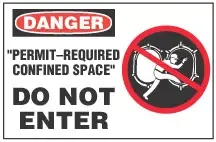
Confined Space Signs and Tags
The OSHA Confined Space Regulation, CFR1910.146 is designed to prevent accidents to employees when working in a space where one has limited or restricted access for entry or exit and while in that area might meet up with liquids, gases or obstacles. Thus, a person entering a confined space must be fully trained in the hazards to be faced and must wear the appropriate protective clothing. The area is also constantly monitored for air quality. Before entering a confined space area, one has to receive a “Confined Space Permit.” To help the process along, a series of signs and tags have been created. They contain proper procedures to follow, Caution and Danger announcements as well as directions for those both entering the area or assisting in the operation.
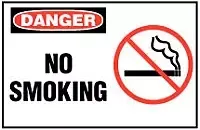
No Smoking Signs
A smoke-free workplace has many advantages. It reduces the amount of smoking by employees. It
also protects others from the dangers of second-hand smoke. Furthermore,
for the employer, it significantly reduces health care costs. People exposed to
smoke in the workplace are 17% more likely to develop lung cancer.
OSHA does
not have any regulations that apply directly to smoking in the workplace.
However OSHA does have standards which limit the exposure levels of a number of
chemicals. And many of the chemicals are found in tobacco smoke. They include but are not limited to limits on carbon
monoxide, nicotine, sulfur dioxide, ammonia, nitric oxide, formaldehyde and
arsenic. So essentially these require that is no smoking or very limited smoking take
place in the workplace. In addition, employers do have a legal right to both
restrict and also prohibit completely the use of tobacco. In some cases, of course, especially when flammable materials or hazardous machinery is present, it is imperative that smoking be prohibited.
To ensure regulations are followed and
workplace safety improved, a number of workplace signs have been created.
For example where chemicals are used the following
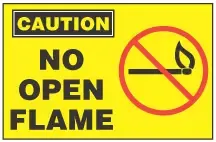
essential signs should be posted: DANGER, OXYGEN, NO SMOKING, NO OPEN FLAMES; DANGER,
BENZENE, CANCER HAZARD, FLAMMABLE – NO SMOKING, AUTHORIZED PERSONNEL ONLY.
RESPIRATOR REQUIRED!
In areas where
lead is present: WARNING, LEAD WORK
AREA, POISON!! NO SMOKING OR EATING. That sign may also include a skeleton
symbol.
When smoking is allowed in some places, a sign may announce: NO SMOKING
EXCEPT IN DESIGNATED AREAS.
Or some prefer low-key signs, such as: THANK YOU FOR NOT SMOKING. Those signs may include
the standard symbol of a cigarette within a circle with a diagonal red line
going through it.
In work areas
populated by multilingual employees the sign may be in more than one language.
An example of that kind of sign might state: NO SMOKING, NO FUMAR.
Signs may be constructed of durable vinyl, with pressure-sensitive backing (for adhering to walls or doors), tough rigid plastic, or the most durable of all, anodized aluminum signs.
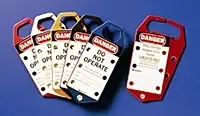
The Safety Factory’s Label Lockout Hasps
In many industrial zones and factories, employers are required by law to establish and implement a lockout/tagout program as mandated by OSHA. Workers performing service or maintenance on machinery and equipment may be exposed to injuries from the unexpected energy start up of the machinery or equipment, or release of stored energy in the equipment. The purpose of this program is to raise awareness of workplace safety and prevent accidents and injuries from occurring on the job.
Real Life Tag
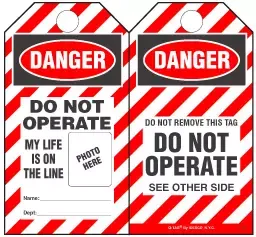
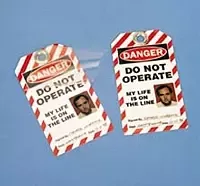
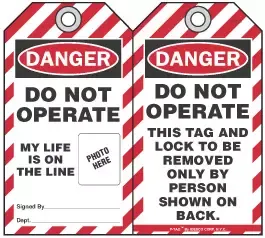
When implementing OSHA1910.147, “The Control of Hazardous Energy,” one is required to attach a tag and a padlock to the locking device protecting the equipment. But what is the best way for the tag in question to have the most impact? All tags must have the OSHA (or ANSI) DANGER header, along with the phrase “Do Not Operate.” However more can be done to raise awareness to all the personnel involved in a lockout situation. By adding a photograph of the person performing maintenance during the lockout situation and including the phrase “My Life Is OnThe Line” makes this tag stand out and really brings out the Safety Message.

Proper Padlock Keying for Lockout:Tagout
Proper Padlock Keying for Lockout:Tagout
The OSHA Lockout:Tagout regulation CFR1910.147 states that Lockout Device is: A device that utilizes a positive means such as a lock, either key or combination type, to hold an energy isolating device in the safe position and prevent the energizing of a machine or equipment
Padlocks, usually combined with a specific type of lockout device such as a circuit breaker lockout or gate valve lockout insure that machinery cannot be in operation during a lockout:tagout situation. In fact a lockout:tagout operation will not begin until all machinery and equipment involved is locked out by the appropriate device and the appropriate lock.
There are basically 3 ways that padlocks are configured for Lockout:Tagout operations.
Padlocks can be set up “Keyed Alike.” In this situation more than one padlock being used has the same key set to open the locks Padlocks can be set up “Keyed Differently.” In this situation a number of padlocks being used have different key sets. So only a key for a specific padlock will open only that padlock and no other. Padlocks can also be set up to be “Master Keyed.” In this case, one or more persons, perhaps the supervisors will a key that will open many if not all padlocks being used, regardless of whether they are keyed alike or keyed differently.
Eye Protection
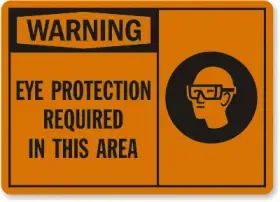
Each year, there are countless work-related eye injuries. With the kind of eye protection available today and the comprehensive OSHA regulations in place these injuries could be and should be avoided. And along with the painful and serious injuries to the workers involved comes the cost of medical expenses, lost production time and worker compensation.
The OSHA regulations required employers to provide both eye and face protection against chemical, environmental, radiological as well as mechanical irritants and hazards. In addition, to protect against flying objects, workers must have side protection. Workers must use filtered lenses with a shade number that is appropriate for the type of work being performed. For example, there are a number of different welding operations. Each one requires its own minimum shade protection.

Lockout Hasps
A lockout hasp is used when more than one employee is involved in a lockout:tagout operation. These employees work in a group on the same energy source. The hasps allow multiple padlocks to be used when isolating one energy source such as a piece of machinery or a power switch. The lockout hasp is placed through a latch on the machinery to be locked out and each person carrying out maintenance or service work attaches their padlock through one of the six openings within the lockout hasp. All of the padlocks are then locked.
continue reading
Fire Egress Signs
There is little or no warning that a fire has started and that it has quickly gone out of control.
So it is extremely important that all preparations for proper egress be made, including signage well in advance and then practiced (drilled) over and over so that there be no mistakes should there actually be a fire. With that in mind, OSHA created the Means of Egress Standard.
The first set of signs to be placed would include the name of the WARDENS.They are the people that the employer or someone designated by the employer selects to act as the leaders of groups of employees to assist in leading them to safe locations.
Other signage that should be placed at key locations throughout the facility is “Floor Plans” which clearly show the emergency escape routes. The use of color-coding for various groups can aid in knowing exactly where to go to leave the facility quickly. Another important sign would indicate the SAFE AREA to exit to. An exit sign has to be made to withstand harsh conditions, so they should be made from heavy-duty laminated plastic.

Handicap Access
ADA signs are designed and manufactured for Handicap persons. They follow the guidelines set up under the Americans with Disabilities Act. And with so many more handicapped employees now being hired under that act, these signs are becoming more and more prominent.
ADA signs can be found wherever a handicap individual will have to negotiate an entrance, a restroom or a walkway. The signs are generally made with heavy-duty lamination, or from steel or aluminum. All signs must have non-glare backgrounds and characters to help ease the way for the elderly and those with little or perhaps no vision.
While these signs are now beginning to be seen in and around factories, they are not the only type of ADA signs. There are also signs for the hearing impaired, people who are deaf and those that may have a mental disorder of some kind.
Protective Gloves
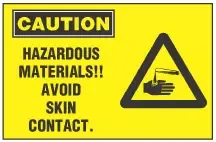
When evaluating the potential for injury to hands while working on equipment, if it is determined that general workplace practice will not in itself provide enough protection then protective equipment must be provided. This includes gloves, finger guards and arm coverings or elbow-length gloves. Machine guards can be shown to provide some protection, but certainly not enough to ward off possible injury.
There are many types of hazards that a worker’s hands may encounter and there are many types of gloves that are available for each of the hazards. It is extremely important that workers use the gloves that have been specifically designed for the type of hazard they face. When making the decision of what type of gloves to choose, the following must be considered: the type of chemicals handled, what type of contact will be encountered, the duration of the contact, what part of the hands or arms are involved, what type of grip is necessary, thermal protection, abrasion protection and the size and comfort needed by the worker.
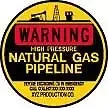
Proper Use Of Utility Signs
J49 CFR 192.707 – Line Markers for Mains and Transmission
Lines states: that when a pipeline is above ground that Line Markers must be
placed and maintained along each section of a main and transmission line that
is located above-ground in an area accessible to the public. Furthermore the following
must be written legibly on a background of sharply contrasting color on each
line marker: the work “Warning,” “Caution,” or “Danger” followed by the words
“Gas” (or the name of the gas transported) Pipeline.” Furthermore, all markers,
except those in heavily developed urban areas must be in letters at least 1
inch high with a ¼” stroke. In addition, the name of the operator and the area
code and telephone number where the operator can be reached at all times must
be included on the sign. The National
Electrical Code also has very specific rules governing underground signage.
Underground signs are also used to indicate water lines and phone cables.
continue reading
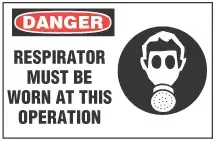
Respirators
According to OSHA 1910.134, Personal Protective Equipment, when engineering controls are neither feasible, available nor effective in preventing the breathing of harmful dusts, fumes, gases, vapors, sprays, etc., then appropriate respirators must be worn. The regulation goes on to say that the employer must provide each employee with respirators that are suitable and applicable for the purpose intended. There are respirators for virtually every type of operation. For example there are Air-Purifying -Atmosphere-Supplying; Escape Only Respirators to name just a few.
Wearing a respirator does not automatically mean that an employee is completely safe from the atmospheric conditions he or she is working in. The maximum use concentration (MUC) is determined by multiplying the assigned protection factor specified for a respirator by the required OSHA permissible exposure limit.
Fire Extinguisher Signs
Fire Extinguisher Signs
The OSHA Fire Protection regulation, 1910.157 states that “The employer shall provide portable fire extinguishers and shall mount, locate and identify them so that they are readily accessible to employees without subjecting the employees to possible injury.” In addition “Portable fire extinguishers shall be provided for employee use and selected and distributed based on the classes of anticipated workplace fires and on the size and degree of hazard which would affect their use.
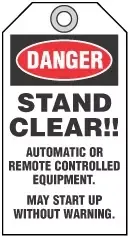
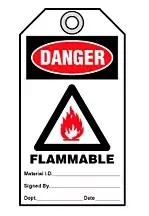
Preventing potential danger with Operational hazard tags
Among the most frequently cited standards by OSHA in 2013 include those involvingLockout:Tagout, Construction, Hazard Communication (including Right-to-Know,) Confined Space, Electrical Components and Equipment.Interesting enough, there are accidental prevention tags that contain verbiage and symbols to help reduce accidents for all of these categories and more. If only they were to be used properly, if at all.Accident Prevention tags can be used to specify rules; to specify procedures; to announce Danger or Caution situations; to announce hazardous conditions; to provide “Right-to-Know” information; to record important data, to name just a few.

Desk-Top Laminators
There are many important items that need the quality long lasting plasticized protection that a desk top laminator delivers. Laminated materials provide protection from weather, abuse, chemical spills and tampering. There are 3 Desk-top laminator sizes: a 4” wide model that is suitable for wallet-sized ID Cards, personalized safety tags, business cards, file cards, driver’s licenses and luggage tags; a 10” wide model that is used for laminating legal and letter sized documents, price lists, signs, 3-hole loos leaf sheets, material safety data sheets and photos; a 12” wide model that is ideal for laminating chart size material and menus. Laminating materials that can be used include clear, matte finish and pressure-sensitive.
Clear Shrink Wrap Sleeve Labels
Shrink wrap
sleeve labels are rapidly growing in many industries. Made from polymer plastic
film, shrink wrap sleeves offer protection to packages and labels. They are
also used to bundle multiple items together. They are often used on bottles
drinks and various other packaged products.

Q-Municator Signs: Creating Safety Signs from Your Computer
Spotting a
safety sign is hard to miss. They are practically everywhere you see them. They can be
found under the sink, on appliances and on the road. The main purpose of a
safety sign is to warn the viewer of a hazard or potential danger. You are likely to see several dozen different types of
safety signs along roads and highways when traveling. Most safety signs are symbol based, therefore
allowing for rapid recognition when driving or reading quickly.
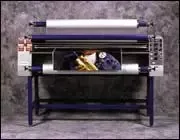
Roll Laminators for Safety Signs and Tags
Documents and plastic cards tend to wear out and fade after being used for a long period of time. Laminating and sealing anything between two sheets of plastic is an effective way to preserve and protect documents, photographs, business cards, posters, or any other piece of paper that is of value to you. If you wish to laminate something, there are a number of options available to you. Roll laminators, for instance, are the most professional and the most expensive models in the industry.
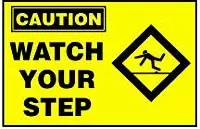
Personal Safety Signs can Prevent Accidents at Workplaces
In this modern
age of health and safety awareness, a lot of people are skeptical about most
health and safety rules. Some people may see it as overkill, bureaucracy gone mad and a
pointless creation of jobs. But, these signs if properly installed and observed
will prevent countless accidents both at work and at home, and the proper
implementation of personal protective equipment rules will minimize the risk of
injury at work in a variety of environments.
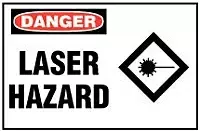
Radiation and Laser Safety
Lasers have
many applications these days. They are often used in scanners and detectors,
night vision optics, medical applications and industry. However, radiation
exposure from lasers can be a serious health risk and it
does exist in many items that we come in contact with on a regular basis, such
as microwave ovens and cellphones.
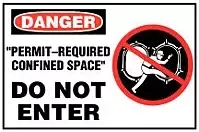
Safety Regulations for Restricted Areas and Confined Space
The OSHA Confined Space Regulation, CFR1910.146 is designed to prevent accidents to employees when working in a space where one has limited or restricted access for entry or exit and while in that area might meet up with liquids, gases or obstacles. Thus, a person entering a confined space must be fully trained in the hazards to be faced and must wear the appropriate protective clothing. The area is also constantly monitored for air quality. Before entering a confined space area, one has to receive a “Confined Space Permit.” To help the process along, a series of signs and tags have been created. They contain proper procedures to follow, Caution and Danger announcements as well as directions for those both entering the area or assisting in the operation.
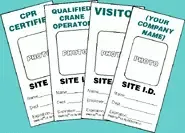
Head Protection and Hard Hat ID’s
Head protection is absolutely crucial for protecting construction industry workers from a wide array of hazards. Hard hats or helmets meeting ANSI standards should be worn any time when there is a risk of falling or moving objects, fixed objects such as exposed pipes or beams on which one might strike their head, or if there is a possibility of accidental contact with electrical hazards. Protective headgear should resist penetration, absorb the shock of a blow, resist water and burns, and display clear instructions.
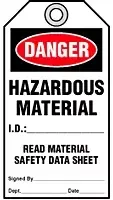
What You Need to Know About Chemical Safety
The use of industrial chemicals in the workplace presents a danger to employees if the
products are not handled safely. OSHA has set up rules requiring the labeling
of chemicals by companies and employee training by employers to minimize the
risk of the chemicals. The Occupational Safety and Health Administration (OSHA)
is tasked to regulate the manufacture and transportation of all materials, including
hazardous ones. When a material is known to present a health or safety hazard, all
materials must be labeled so employees who must work with the material are
aware of its dangers.
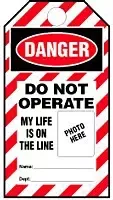
Laminated Safety Tags: Real Life Tags
Lamination provides the ultimate protection for mass-produced safety tags. The Safety Factoryhas a wide selection of OSHA approved laminated safety tags designed to withstand tough, dirty and greasy conditions. The durable polyester laminate resists water, grease and extreme temperatures. These laminated safety tags are easy to use. Simply attach these custom safety tags to machines, equipment and other devices to warn of dangers and communicate status.
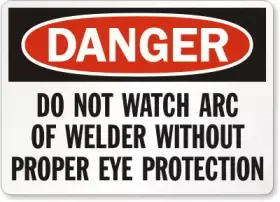
Welding Arc and Eye Protection
Welding can injure both the welder and others working nearby. Welding fumes, vapors, particulates and high intensity light all pose a threat to people that are exposed to them. Temporary or permanent damage to the eyes can result from welding depending on the length and type of exposure. Welding generates metal fumes, chemical gases and vapors. These chemicals can cause irritation of the outer layer of the eye and the cornea.
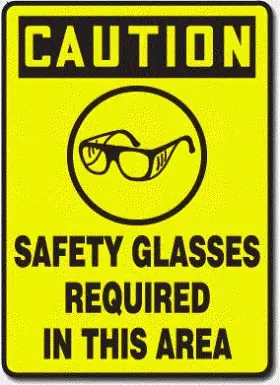
Safety Glasses
Thousands of people are yearly blinded from work-related eye injuries that could have been prevented with the proper selection and use of eye protection. Eye injuries alone cost more than $300 million per year in lost production time, medical expenses, and worker compensation. Eye and face protection is addressed in specific standards for the general industry, shipyard employment, long shoring, and the construction industry.
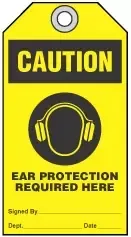
Ear Protection Safety Signs
The most guaranteed method of preventing occupational deafness is by reducing noise at the source by engineering methods. However, in certain workplace conditions, there is very little or nothing one can do to reduce noise at the source. In such workplaces, workers wear hearing protectors to reduce the amount of noise reaching the ears.
Danger: Do Not Enter This Area Unless You Are Wearing A Hard Hat
Hand shields or helmets provide eye protection by using an assembly of components such as a helmet shell. This helmet must be opaque to light and resistant to impact, heat and electricity. Outer cover plate made of polycarbonate plastic which protects from UV radiation, impact and scratches. This helmet also includes filter lens made of glass containing a filler which reduces the amount of light passing through to the eyes.
Danger: Respirator Must Be Worn At This Operation
Danger:
Respirator Must Be Worn At This Operation
Wearing a respiratory protection
device does not mean that you are safe. The atmosphere that surrounds you at
work still remains dangerous. The air that we breathe in is never "100%
clean". For example, your lungs can attacked by cooking smells, carpet
deodorizers, chlorine in bleach, cigarette smoke or dead skin cells from
animals in your own home. In your yard
or on the street, car exhaust, household and industrial smoke, smell of freshly
cut grass, tree resin, fungus dust, flower pollens and dust taken by wind, are
omnipresent. Moreover, some types of work generate substantial amounts of
atmospheric contaminants. For example, spraying with pesticides, washing with
solvents, grinding metal, transferring wheat on a feeder, painting with a spray
gun or arc welding belong to this group.
NSC Congress & Expo is coming...are you ready?
The Safety Factory is exhibiting in Booth 1246
Safety excellence is an ongoing journey. Learn how to apply best
practices and successful methods to transform your biggest challenges. Be
a force of change in your organization by bringing the knowledge home!
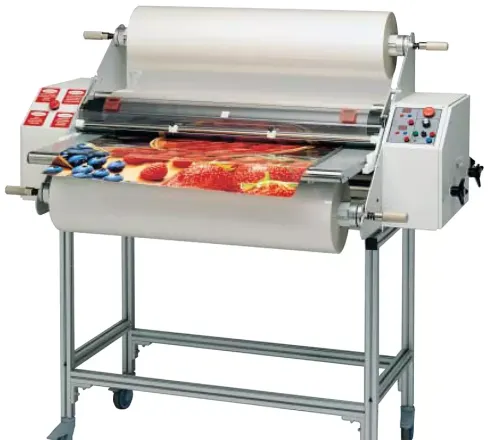
Laminating Roll Materials
What are Laminating Roll Materials?
Laminating roll materials typically refers to the large laminate sheets that are wound around a tubing of identical length to the sheet. The entire laminate sheet and tube are fitted into a roll laminator machine, which rotates to feed the laminate sheet through the machine, with the substrate side pressing the sheet against the object being laminated (in this case a board or piece of paper).
Q-Tags and Customized Laminated Tags
What are Q-Tags? Q-Tags are mass-produced safety tags
laminated using The Safety Factory's proprietary lamination method. The Q-Tag lamination
method is employed specifically for safety tags that are harder to laminate
using existing and traditional methods, such as bar codes, photos, tags
containing special messages, machine-specific data, right-to-know chemical stats
and descriptions or any other unique type of safety tag that is not easy to
categorize.
Safety Signs in the Food Industry
The modern democratic world is highly bureaucratic and
organized when it comes to safety sign
requirements in the commercial arena. It is virtually canonical for insurance companies
in developed countries to require the presence of industry-specific and/or
general safety signs in work areas as part of their insurance policies.
This is especially applicable to the food industry, which on
top of containing specific potential dangers to employees, additional care has
to be taken to avoid food contamination, which can harm customers and thus
result in a number of different lawsuits.

Plug and Switch Lockouts
Lockouts are also known as “tag outs,” and hence the term lockout/tag out is often seen in tandem. A lockout/tag out refers to a procedure whereby a company assigns an individual to shut down power and disconnect all equipment and machinery from its primary energy source. The reason for doing so is in an emergency when becoming necessary to prevent the unexpected activation of that machinery as a means to protect workers and employees. The assigned employee then activates the energy-isolation (lockout/tag out) devices in a safe or “off” position.

Small and Large Lamination Pouches
Laminating pouches are typically measured in inches and small laminating pouches range from 2 x 3 inches (length and width) to 3 x 5 (a typical 3-by-5 index card). Large laminating pouches range in size from (3.5 x 5.5 inches, which are the dimensions of file cards, to 12 x 18 inches, which is the size of a typical menu and many charts.
What is a Lamination Pouch?
A lamination pouch is a sealed air-tight plastic pouch with the capability to protect a number of work and home-related supplies, namely documents and other items which are typically written on. A heat-activation process binds the print material to the inside of the lamination pouch, which contributes to the tight seal created during the lamination process.
For example, a lamination pouch can be used for safety signs, labels, ID cards and luggage tags. Laminating pouches are different from traditional lamination in that the air-tight seal protects the contents of the pouch by preventing moisture and other foreign materials from entering the lamination cover. For this reason many industries, such as construction sites and plants, turn to lamination pouches in order to protect signs that are vital for employee safety.

What is a Padlock?
Purpose of a Padlock
Padlocks are external, portable locks that can be placed in most locations, versus the traditional stationary lock, such as the type that is built in to a door. Padlocks are also different in another regard: they were designed specifically in order to protect against vandalism, defacement, or any of type of forced entry. They are typically used to protect the contents of storage units, such as sheds, but are very widely used for safety purposes as well, such as for keeping employees out of potentially dangerous areas.
What is Lamination?
Lamination is 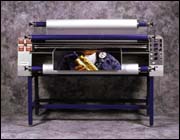 the process by which two or more layers of material are glued together and
placed within a plastic covering as to protect them from damage and normal wear
and tear or deliberate damage.
This type of lamination, which is the one that
people most commonly refer to, should not be confused with the type associated
with electrical engineering, which is a technique used to reduce undesired
heating effects. The plastic covering sheath used to cover the materials is
known as a laminate. Credit cards, photo ID cards and formal documents are some
of the most commonly laminated items, but the process is used for protecting
virtually any paper document that might need protection, such as school reports
and diplomas.
the process by which two or more layers of material are glued together and
placed within a plastic covering as to protect them from damage and normal wear
and tear or deliberate damage.
This type of lamination, which is the one that
people most commonly refer to, should not be confused with the type associated
with electrical engineering, which is a technique used to reduce undesired
heating effects. The plastic covering sheath used to cover the materials is
known as a laminate. Credit cards, photo ID cards and formal documents are some
of the most commonly laminated items, but the process is used for protecting
virtually any paper document that might need protection, such as school reports
and diplomas.
What are Safety Signs?
In simple terms, safety signs are signs that include a range of messages with the intent of keeping people from physical harm. Other signs are preventive in nature, instructing people for or against taking certain actions. A third type of safety signs are those categorized as informational and simply alert people to certain information, such as the whereabouts of a fire extinguisher. These signs are found in a range of different locations: factories, offices, educational institutions, and just about in any place where large amounts of people congregate.