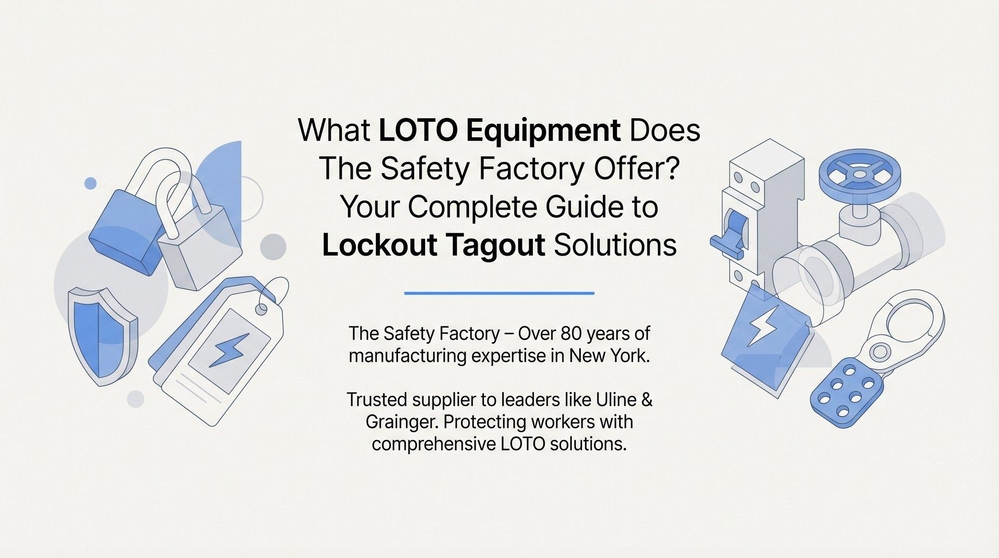
What LOTO Equipment Does The Safety Factory Offer? Your Complete Guide to Lockout Tagout Solutions
13 min read•For Thesafetyfactory.com
Picture this: A maintenance technician reaches to restart a machine, unaware that a colleague is inside performing repairs. In that split second, a life hangs in the balance. This scenario plays out in facilities across the country, but it doesn't have to. Lockout tagout procedures—when properly implemented with the right equipment—create an impenetrable barrier between workers and hazardous energy sources.
For over 80 years, The Safety Factory has stood at the forefront of workplace safety. Originally known as Idesco Safety, we've been manufacturing lockout tagout equipment right here in New York, supplying industry leaders like Uline and Grainger with the tools that keep workers safe. Our decades of experience have taught us one fundamental truth: quality LOTO equipment isn't just about compliance—it's about ensuring every worker goes home safely at the end of their shift.
Whether you're building a lockout tagout program from scratch or upgrading your existing safety protocols, understanding the full range of available LOTO equipment is essential. This guide walks you through the critical components of a comprehensive lockout tagout system and how to select the right solutions for your facility's unique hazards.
The Foundation of LOTO: Understanding Lockout Tagout Essentials
OSHA's lockout tagout standard, codified in 29 CFR 1910.147, isn't a suggestion—it's a legal requirement that protects workers from the unexpected energization or startup of machinery during servicing and maintenance. The regulation applies to nearly every industry where workers service equipment that could unexpectedly release stored energy.
Think of lockout tagout as a two-part safety system working in perfect harmony. The lockout component uses physical devices—padlocks, hasps, valve lockouts, and circuit breaker covers—to mechanically prevent equipment from being energized. These devices create a physical barrier that cannot be bypassed without deliberate action, typically requiring the removal of a lock to which only the authorized worker has the key.
The tagout component complements this physical barrier with critical communication. Tags serve as visible warnings that explain why equipment is locked out, who locked it out, when the lockout began, and what hazards exist. While locks prevent action, tags prevent confusion and provide essential context to everyone in the facility. Understanding OSHA-approved self-laminating safety tags helps ensure your program meets regulatory requirements.
Here's where many facilities miss the mark: relying solely on locks or solely on tags. OSHA requires both components working together because each addresses different aspects of worker protection. A lock without a tag leaves workers guessing about the reason for lockout and who to contact. A tag without a lock provides a warning but no physical prevention—and warnings can be ignored or overlooked in busy industrial environments.
The stakes couldn't be higher. Unexpected equipment energization can result in electrocution, crushing injuries, amputations, burns, and fatalities. Proper LOTO equipment creates multiple layers of protection, ensuring that even if one safety measure fails, others remain in place to protect workers performing maintenance, repairs, cleaning, or servicing activities on machinery and equipment.
Do Not Operate Tags: The First Line of Communication
When you approach a piece of locked-out equipment, the first thing that should catch your eye is a Do Not Operate tag. These tags serve as the universal signal that equipment is out of service and under the control of an authorized worker. Their purpose is simple but critical: prevent anyone from attempting to operate, energize, or interfere with equipment that's being serviced.
Effective Do Not Operate tags share several essential design features. High-contrast colors—typically red and white or red and black—ensure visibility from a distance, even in poorly lit industrial environments. The message must be unmistakable and immediate: "DANGER: DO NOT OPERATE" or "DO NOT START" in bold, large lettering that can't be misinterpreted.
Durability matters more than you might think. These tags face harsh industrial conditions: oil spray, chemical exposure, temperature extremes, and physical wear. The Safety Factory manufactures tags from materials engineered to withstand these environments without fading, tearing, or becoming illegible. Facilities dealing with chemical hazards in the workplace need tags that resist corrosive substances while maintaining readability.
Beyond the warning message, quality Do Not Operate tags include spaces for critical information. The authorized worker's name establishes accountability and provides a contact point if questions arise. The date and time of lockout help track how long equipment has been out of service. Some tags include space for additional notes about the specific work being performed or particular hazards present.
The attachment method deserves attention too. Tags must stay securely attached to lockout devices or equipment throughout the entire duration of maintenance work. Heavy-duty grommets and reinforced attachment points prevent tags from tearing free, while weather-resistant materials ensure they remain readable regardless of environmental conditions.
In a properly executed LOTO procedure, the Do Not Operate tag works in tandem with a physical lock. The tag attaches to the same point as the lock—whether that's a lockout hasp, a valve lockout device, or a circuit breaker cover. This pairing creates an unmistakable message: this equipment is both physically secured and under the protection of an authorized worker.
Energy Isolation Point Tags: Marking Every Hazard Source
Equipment rarely has just one energy source. A typical industrial machine might draw electrical power, use compressed air for pneumatic functions, rely on hydraulic pressure for movement, and store mechanical energy in springs or flywheels. Missing even one of these energy sources during lockout can prove fatal. Energy isolation point tags help workers systematically identify and secure every hazard.
Think of these tags as a comprehensive mapping system for your facility's hazards. Each energy isolation point—whether it's an electrical disconnect, a pneumatic valve, a hydraulic line, or a steam supply—receives its own identification tag. This systematic approach prevents the most common and dangerous LOTO failure: overlooking a secondary energy source. Facilities working with heated systems should also consider thermal isolation tags for comprehensive protection.
Electrical energy sources are often the most obvious, but thermal energy in heated systems, chemical energy in process lines, and gravitational potential energy in suspended loads all require isolation. Energy isolation point tags help maintenance workers methodically work through each energy source, checking off each one as it's secured and verified.
The information on these tags serves a dual purpose. During routine operations, they help workers quickly locate the correct isolation points for specific equipment. When equipment is locked out, they provide a checklist ensuring all energy sources have been addressed. Many facilities color-code these tags by energy type: red for electrical, blue for pneumatic, yellow for hydraulic, green for mechanical.
Best practices for energy isolation point tag placement emphasize accessibility and visibility. Tags should be positioned directly at or immediately adjacent to the isolation device—the circuit breaker, valve, or disconnect switch. They should be readable without moving other equipment or accessing confined spaces. If an isolation point is difficult to reach, consider installing a secondary tag at a more accessible location with directions to the actual isolation device.
The information included on energy isolation point tags typically includes the equipment name or number served, the type of energy controlled, the normal operating position (open/closed, on/off), and any special precautions. This level of detail proves invaluable during complex lockout procedures involving multiple pieces of interconnected equipment.
Electrical Safety Tags: Specialized Protection for High-Risk Work
Electrical hazards demand special attention in any lockout tagout program. The invisible nature of electrical energy, combined with its potential for instantaneous injury or death, requires specialized tags that go beyond general LOTO warnings. Electrical safety tags address these unique risks with specific messaging and information relevant to electrical work.
These tags typically feature more urgent warning language and symbols specifically related to electrical hazards: lightning bolts, electrical shock warnings, and explicit "HIGH VOLTAGE" or "ENERGIZED EQUIPMENT" messages. The goal is to immediately communicate the specific nature of the hazard to anyone approaching the equipment, even if they're not directly involved in the maintenance work. Comprehensive guidance on electrical safety in the workplace helps establish proper protocols for your team.
Arc flash considerations add another layer of complexity to electrical safety tagging. Modern electrical safety tags often include space for arc flash boundary information, required personal protective equipment (PPE) levels, and incident energy calculations. This information helps workers understand not just that electrical hazards exist, but the specific precautions required when working near or on the equipment.
Integration points matter significantly for electrical safety tags. They must work seamlessly with the physical lockout devices used on electrical panels, circuit breakers, disconnect switches, and motor control centers. The Safety Factory designs electrical safety tags with attachment methods compatible with common electrical lockout devices, ensuring tags stay securely in place on breaker handles, switch covers, and panel doors. Using thermoplastic non-conductive padlocks alongside these tags provides an additional layer of electrical protection.
Many facilities maintain separate electrical safety tags for different voltage levels or different types of electrical equipment. A tag for a 480-volt motor circuit might include different information and warnings than a tag for a 120-volt control circuit. This differentiation helps workers immediately understand the severity of the hazard they're facing.
Maintenance Safety Tags: Beyond Basic Lockout
While lockout tagout focuses specifically on energy isolation during servicing, the broader category of maintenance safety tags addresses the full spectrum of equipment status communication. These tags help facilities manage everything from scheduled preventive maintenance to unexpected breakdowns to equipment awaiting repair parts.
Out of Service tags communicate that equipment is non-functional but may not necessarily be locked out. Perhaps it's waiting for replacement parts, scheduled for repair during the next maintenance window, or removed from service due to quality concerns. These tags prevent operators from attempting to use equipment that won't function properly or safely. The concept of operational safety tags extends this protection to various equipment states.
Inspection tags track when equipment last received safety checks and when the next inspection is due. These tags help facilities maintain compliance with manufacturer recommendations and regulatory requirements for periodic equipment inspections. They also provide a quick visual reference for maintenance supervisors tracking which equipment needs attention.
Repair in Progress tags serve a similar function to Do Not Operate tags but typically indicate less hazardous situations. Equipment might be disassembled for cleaning, undergoing adjustments, or receiving non-critical repairs that don't require full lockout procedures. These tags still prevent unauthorized operation but signal a different level of work activity.
Calibration tags deserve special mention in facilities with precision equipment or quality-controlled processes. These tags document when equipment was last calibrated, who performed the calibration, and when the next calibration is due. They help maintain measurement accuracy and provide audit trails for quality management systems.
The key advantage of maintaining a comprehensive maintenance tag system is improved communication across shifts and departments. When the day shift leaves a piece of equipment tagged with specific status information, the night shift arrives with complete context about what's happening with that equipment. This continuity prevents confusion, reduces downtime, and enhances overall facility safety.
Building Your Complete LOTO Program with American-Made Equipment
Creating an effective lockout tagout program requires more than just buying tags and locks. It demands a systematic approach to identifying your facility's specific hazards, selecting appropriate equipment for each situation, training workers thoroughly, and maintaining the program over time. The right manufacturing partner makes this process significantly easier.
Start by conducting a comprehensive energy survey of your facility. Walk through each piece of equipment with your maintenance team and document every energy source: electrical panels, compressed air lines, hydraulic systems, steam supplies, chemical feeds, and mechanical stored energy. This survey becomes the foundation for determining what types and quantities of LOTO equipment you need. Proper tracking of workplace injuries and illnesses helps identify where your LOTO program may need strengthening.
Different equipment configurations require different combinations of tags and devices. A simple piece of equipment with a single electrical disconnect might need only a lockout device and Do Not Operate tag. A complex production line with multiple energy sources might require several locks, multiple energy isolation point tags, electrical safety tags, and coordination among several maintenance workers using group lockout procedures. Exploring label lockout hasps provides additional options for multi-worker lockout scenarios.
Working with a manufacturer that has 80 years of safety industry expertise provides advantages that extend beyond product quality. The Safety Factory understands the practical challenges of implementing LOTO programs because we've partnered with facilities across every industry for decades. We've supplied major distributors like Uline and Grainger with products that meet the most demanding industrial applications.
American manufacturing matters when it comes to safety equipment. Products manufactured in our New York facility undergo rigorous quality control and meet strict durability standards. When you need custom tags for unique equipment or specialized applications, domestic manufacturing means faster turnaround times and easier communication about your specific requirements. You're not waiting weeks for overseas production or dealing with language barriers when discussing technical specifications.
Consider standardization across your facility. Using consistent tag designs, colors, and information layouts makes LOTO procedures more intuitive for workers and reduces the chance of confusion. The Safety Factory can help develop standardized tag systems that work across your entire operation while still accommodating equipment-specific needs.
Don't overlook the importance of tag durability and longevity. Cheaper tags might save money initially, but they cost more in the long run when they need frequent replacement. Tags that fade, tear, or become illegible compromise safety and create compliance gaps. Quality manufacturing ensures tags maintain their protective function throughout their service life.
Your Next Steps Toward Comprehensive Lockout Tagout Protection
Effective lockout tagout programs don't happen by accident. They require thoughtful planning, quality equipment, thorough training, and ongoing commitment to worker safety. The tags and devices you choose form the foundation of this protection, creating visible barriers between workers and hazardous energy sources.
The Safety Factory brings more than eight decades of safety industry experience to every product we manufacture. Our heritage as Idesco Safety, combined with our ongoing partnerships supplying major distributors like Uline and Grainger, demonstrates our commitment to quality and reliability. When you choose American-made LOTO equipment manufactured in New York, you're investing in products engineered to perform in the harshest industrial environments.
Your workers deserve the best protection available. That means Do Not Operate tags that remain visible and legible throughout extended lockout periods. Energy isolation point tags that help workers systematically secure every hazard source. Electrical safety tags with clear warnings and critical information. Maintenance safety tags that keep everyone informed about equipment status. All manufactured to exacting standards by a company that's been keeping workers safe since before OSHA existed.
Whether you're implementing your first formal LOTO program or upgrading existing safety procedures, having a trusted partner makes the difference between a program that exists on paper and one that genuinely protects workers every single day. As a one-stop provider for safety essentials, we offer the complete range of lockout tagout tags and equipment your facility needs, backed by expertise that comes only from decades of real-world application.
Ready to build a lockout tagout program that truly protects your workers? Learn more about our services and discover how The Safety Factory's comprehensive range of American-made LOTO equipment can provide the foundation for safer maintenance procedures, better hazard communication, and complete peace of mind that your workers are protected by the best equipment available.
Recents Posts