What LOTO Equipment Does The Safety Factory Offer? Your Complete Guide to Lockout Tagout Solutions
Picture this: A maintenance technician reaches to restart a machine, unaware that a colleague is inside performing repairs. In that split second, a life hangs in the balance. This scenario plays out in facilities across the country, but it doesn't have to. Lockout tagout procedures—when properly implemented with the right equipment—create an impenetrable barrier between workers and hazardous energy sources. For over 80 years, The Safety Factory has stoo
OSHA Top Citied Standards
Occupational Safety and Health Administration (OSHA), the top 10 most frequently cited standards
Making Your Own OSHA Standard Lockout Tags has Never Been Easier
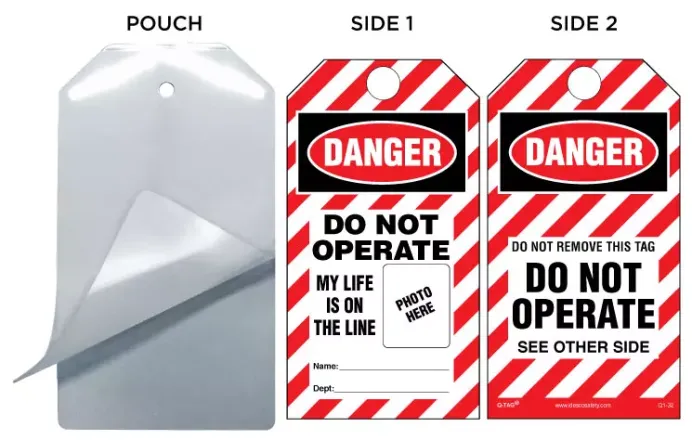
There are a few rules in business and industry that are golden mantras to live by. First, the pursuit of profit is always a noble venture. Second, pursuing that profit at the expense of angering OSHA is never worth it. If there were a mantra that trumped both of prior, it would be that unnecessarily risking the live of your employees in the pursuit of profit is never worth it. There are risky jobs, to be sure, but casually treating employee safety like another line item expenditure has both moral and business implications. Here at The Safety Factory, we’ve made both the business decisions the passionate American entrepreneur has to make and the safety of our fellow Americans paramount. There is an economical way to ensure that a machine isn’t charged with energy when lives are at the risk and that also makes OSHA happy. Introducing the Peel-N-Stick P-Tag and the Self-Laminated Q-Tag.
Electrical Safety In The Workplace
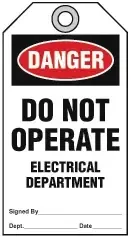
The Electrical
Safety Foundation International (EDFI) has designated May as National Electrical
Safety Month. On average, there are more than 300 deaths and over 4,000
injuries per year caused by Electrical Hazards in workplaces here in the United
States. Over 60% of the injuries are due to electric shock, the remainder
caused by electric burns. Electric shock is caused by either direct or indirect
contact with a conductive part that is energized. Electrical arcing, explosions
or fire result in burns. Toxic gases released as a result of fire as well as
the burning of electrical equipment often leads to severe illness or death.
Locking Out Valves During Maintenance
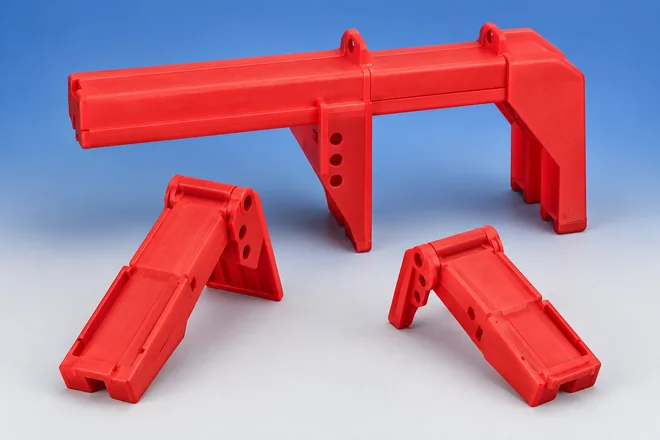
A number of various chemicals, hot or cold water as well as steam can cause serious injury to a worker performing maintenance. According to the OSHA regulation 1910.147, “The Control of Hazardous Energy” (Lockout/Tagout) all sources of energy to include, hydraulic, pneumatic, chemical and thermal must be locked out during a maintenance operation. To help satisfy that requirement, devices have been developed to insure that both liquids and gases are securely locked out.
Circuit Breaker Lockouts
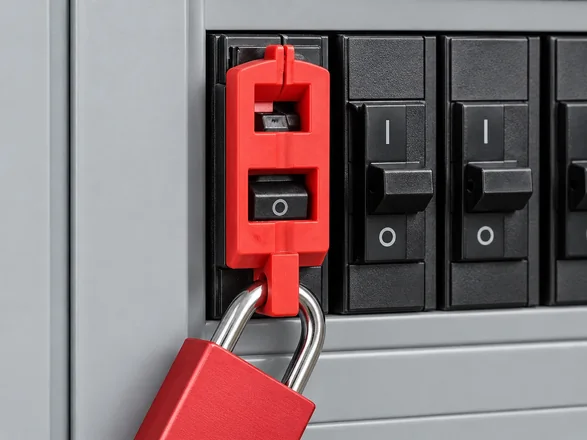
A circuit breaker can be an energy-isolating device when the correct lockout is fitted and secured under a documented procedure. Match the device to the breaker, isolate every relevant source, control stored energy, and verify the equipment is safe before work begins. Electrical work and machine servicing can have different OSHA lock-and-tag requirements.
Preventing an automatic restart with safe start devices
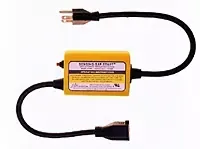
Often times electrical equipment being used in a factory operation may suddenly shut down. This may be due to an internal power malfunction, a local power plant problem, a sudden jam in a gear, just to name a few. When this type of unintentional shut down takes place, it is extremely important to insure that the equipment does not suddenly start up again. Such an event may catch employees by surprise and lead to a serious accident. The Sensing Saf-Start device automatically “opens” the circuit once there is a sudden power loss. The circuit will remain “open” as long as the equipment power switch is “on.” Once the power switch is turned “off”, the Sensing Saf-Start device will then close the circuit. At that point, with everyone aware that the equipment can now be safely restarted, the power switch can be turned “on” and normal operation resumed.
continue reading

Lock Wrap Labels for Padlocks
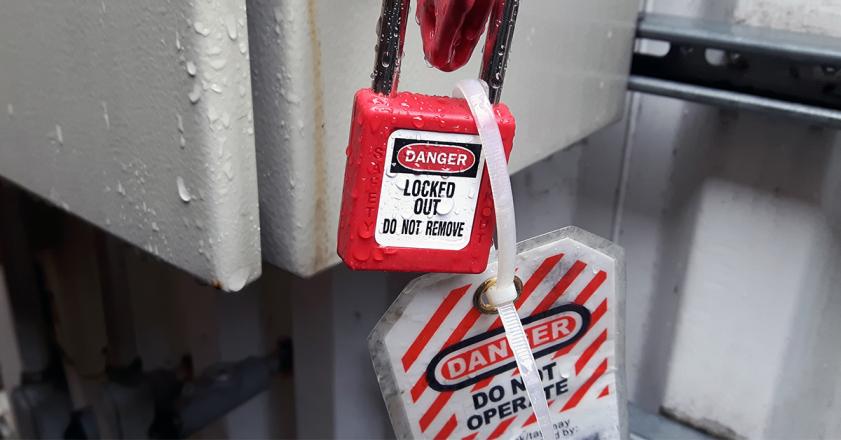
In September of 1989, The OSHA Lockout:Tagout Regulation CFR1910.147 went into effect. It clearly stated that equipment being serviced had to be completely shut down and had to be both "Locked Out" and "Tagged Out" (with the tag firmly attached to the lock) clearly identifying the person or persons involved in that servicing operation. Furthermore, to insure the tag could not inadvertently slip off, tear off or somehow be removed from the padlock, both the tag and the device used to attach it to the padlock had to be strong enough to "pull" 50 pounds. And thus, the LockWrap(R) Padlock Label was created. The LockWrap acts as a tag and is wrapped securely around the padlock and cannot be removed.
continue reading

Fuse Blockouts and Latchouts
Section (c) (5)(i) of Lockout Regulation CFR 1910.147 states that Locks, tags, chains, wedges, key blocks, adapter pins, self-locking fasteners, or other hardware shall be provided by the employer for isolating, securing or blocking of machines or equipment from energy sources. Fuse holders and fuse panels are types of energy systems that are difficult to lockout. In order to satisfy the OSHA rule, devices have been devised that “blockout and “latchout” these energy sources. These devices keeps the electrical energy systems “OPEN” with no way for electrical energy to be reconnected. However, as there is no latch on these devices, there not be a padlock to insure that these devices will not be removed.
The Safety Factory’s Label Lockout Hasps
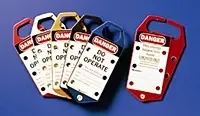
In many industrial zones and factories, employers are required by law to establish and implement a lockout/tagout program as mandated by OSHA. Workers performing service or maintenance on machinery and equipment may be exposed to injuries from the unexpected energy start up of the machinery or equipment, or release of stored energy in the equipment. The purpose of this program is to raise awareness of workplace safety and prevent accidents and injuries from occurring on the job.
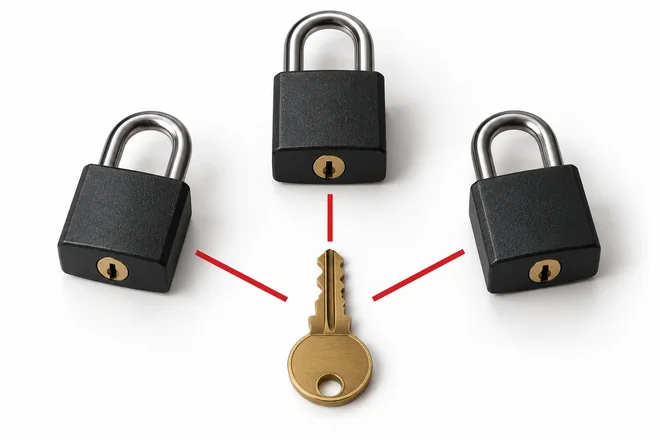
Proper Padlock Keying for Lockout:Tagout
Lockout/tagout padlocks keep energy-isolating devices secured during maintenance. Their keying determines which keys open which locks. Keyed-alike padlocks share a key pattern, so one key opens a designated set; keyed-different padlocks use separate keys. A master-keyed system adds a key capable of opening multiple locks, but it does not permit routine removal of another worker's personal lock. Selecting an arrangement depends on the workers, equipment, and shifts involved. In group work, clear lock assignments help everyone see who is still working before equipment returns to service. Whatever the keying, each worker’s lock must be managed under the site’s energy-control procedure, including its rules for removal.
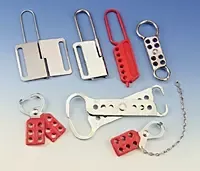
Lockout Hasps
A lockout hasp is used when more than one employee is involved in a lockout:tagout operation. These employees work in a group on the same energy source. The hasps allow multiple padlocks to be used when isolating one energy source such as a piece of machinery or a power switch. The lockout hasp is placed through a latch on the machinery to be locked out and each person carrying out maintenance or service work attaches their padlock through one of the six openings within the lockout hasp. All of the padlocks are then locked.
continue reading
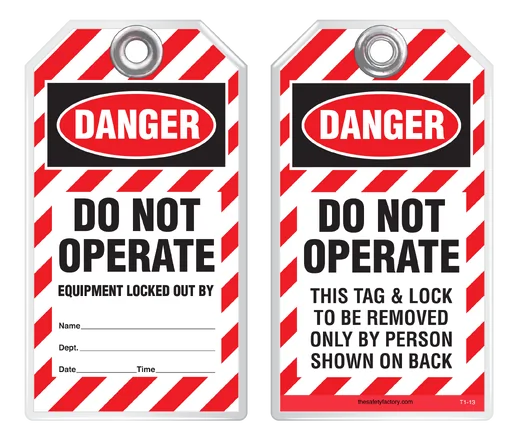
Laminated Safety Tags: Real Life Tags
Laminated and encapsulated safety tags can help keep warnings and identification legible in demanding workplaces. For lockout/tagout, choose a tag and attachment suited to the work and identify the employee who applied it. A photo may help coworkers recognize that person, but OSHA does not require one.
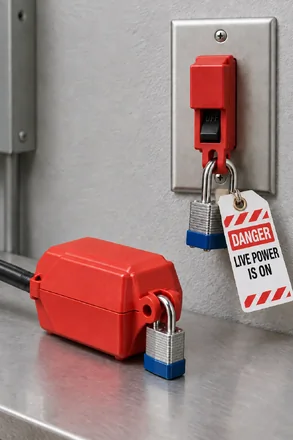
Plug and Switch Lockouts
Lockouts are also known as “tag outs,” and hence the term lockout/tag out is often seen in tandem. A lockout/tag out refers to a procedure whereby a company assigns an individual to shut down power and disconnect all equipment and machinery from its primary energy source. The reason for doing so is in an emergency when becoming necessary to prevent the unexpected activation of that machinery as a means to protect workers and employees. The assigned employee then activates the energy-isolation (lockout/tag out) devices in a safe or “off” position.
