Laminated Safety Tags: Real Life Tags
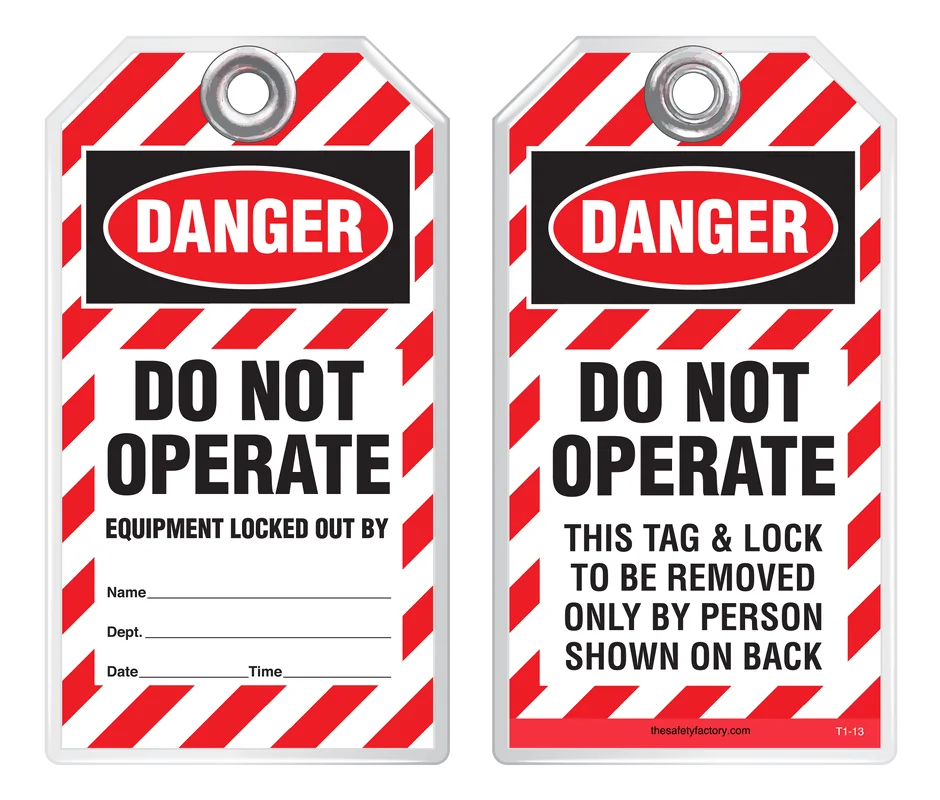
Laminated and encapsulated safety tags help protect printed warnings and writable information from normal handling and workplace exposure. Durability depends on the tag material, printing, attachment, and conditions of use, so select a tag for the actual environment and replace it when its message is no longer legible.
What a lockout/tagout tag must do
Under OSHA 29 CFR 1910.147, tagout devices used for servicing and maintenance must be durable, standardized, legible, and identifiable as to the employee who applied them. The attachment must meet the standard's requirements, including a non-reusable, self-locking, non-releasable means with a minimum 50-pound unlocking strength. A tag is a warning device; it does not physically prevent operation. Follow the employer's energy-control procedure when deciding whether a lock, tag, or both are required.
OSHA does not approve or endorse individual commercial safety tags. Product selection and correct use depend on the applicable standard and the worksite's procedure.
Printed tags and photo-ID tags
The T1-13 “Danger—Do Not Operate” tag pictured here is an example of a printed warning tag. Its front provides spaces for the person who locked out the equipment to write a name, department, date, and time. Check the product specifications and the worksite procedure before using any tag in a lockout application.
A photo-ID tag can provide an additional visual cue about the worker who applied it. OSHA requires identification of that employee, but it does not require a photograph. For work involving more than one employee or lockout point, follow the employer's group lockout procedure; a photograph or tag alone does not establish each worker's personal protection.
Keep the warning easy to read, attach it securely at the energy-isolating device, and use the wording required by the applicable procedure. See OSHA's control-of-hazardous-energy standard for the governing U.S. general-industry requirements.
Recents Posts
