Making Your Own OSHA Standard Lockout Tags has Never Been Easier
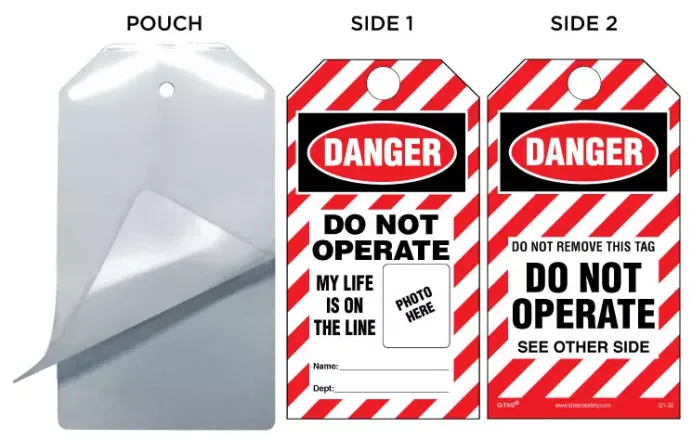
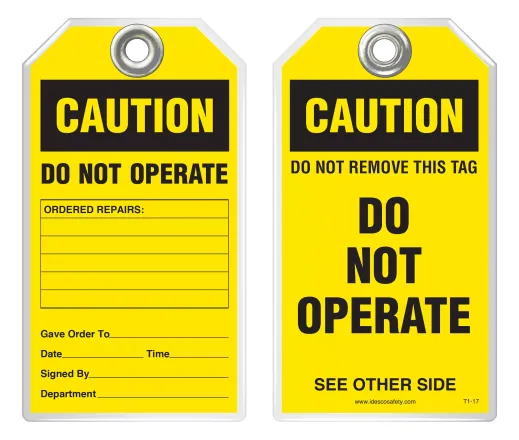
There are a few rules in business and industry that are golden mantras to live by. First, the pursuit of profit is always a noble venture. Second, pursuing that profit at the expense of angering OSHA is never worth it. If there were a mantra that trumped both of prior, it would be that unnecessarily risking the live of your employees in the pursuit of profit is never worth it. There are risky jobs, to be sure, but casually treating employee safety like another line item expenditure has both moral and business implications. Here at The Safety Factory, we’ve made both the business decisions the passionate American entrepreneur has to make and the safety of our fellow Americans paramount. There is an economical way to ensure that a machine isn’t charged with energy when lives are at the risk and that also makes OSHA happy. Introducing the Peel-N-Stick P-Tag and the Self-Laminated Q-Tag.
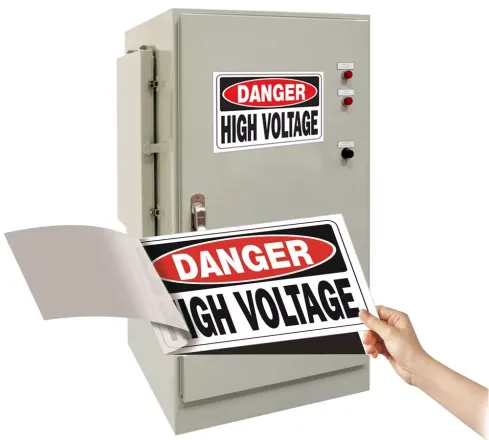
Utilizing the Beautifully Simple and Safe Padlock Label
It is a general rule of thumb when working in a hazardous environment that “what OSHA wants OSHA gets.” It is not that industry of any sort loves government influence and wakes up hoping for a new set of regulations in the workplace. Rather, it is that there is little benefit worth drawing the ire of OSHA and when it comes to the safety of your employees you can never go too far. That’s why if you haven’t picked up padlock labels yet for your organization, then now is the time to do so. OSHA requires that lockout devices be standardized within the facility in at least one of the following criteria: color; shape; or size. That is to say than any employee would immediately recognize this particular lock as it is used for no other purpose at the facility. Thankfully for your organization, we’ve got you covered with some beautifully designed simple and safe options for padlock labels.
From Magnets to Mirrors: Making Your Workplace Safe Again
In the field of industry, there is a phenomenon known as practical drift. Policy dictates a process be completed a certain way, but on the front line where the real work is done employees tend to show new employees a “better way.” What happens then is that real time operations deviate from established safety protocols and the scope of the problem is only discovered after a tragic accident. Sadly, it is an accident that could have been avoided had managers not assumed policy and protocol was being followed on the front lines. If you fear that might be your organization, then take a look at two of the most commonly overlooked safety feature solutions we offer. From magnets to mirrors, we’ll show you what it takes to make your workplace safe again.
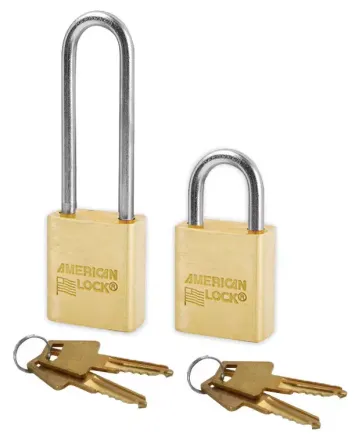
Keep OSHA Happy and Your Employees Safe with Professional Padlocks
It might seem like a simple tool, but the trusty padlock has worked to keep persons in or out since the 19th century. Technology and metallurgy has come a long way since then, but the simple premise hasn’t changed. That’s why when OSHA requires padlocks to keep machinery from being engaged or activated during routine maintenance and repair they have little tolerance for those who don’t comply. There is simply no excuse to put your employees at risk in the mind of OSHA and certainly not when padlocks come in all varieties for prices that hardly put a dent in the corporate budget. So if you have been tasked with securing your organization’s safety equipment, then let’s not be distracted by YouTube or Twitter and get this job done right shall we. Here’s how to keep OSHA happy and your employees safe with simple, professional, and affordable padlocks.
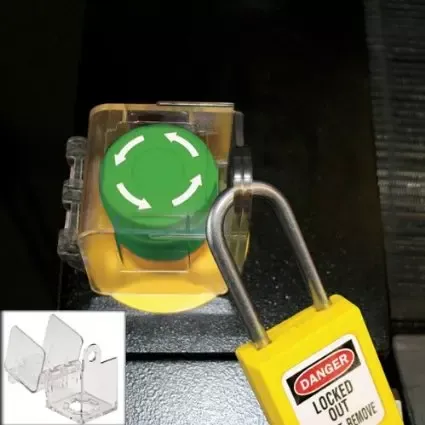
Save Your Employees and Your Brand with OSHA Compliant Lockouts
Currently there exists a show in circulation titled, “Hard to Kill”, which profiles some of America’s most deadliest jobs. Hosted by Army Special Forces Veteran Tim Kennedy, he tackles these deadly occupations head on and likely with a great deal of technical and safety support around him. There is no doubt a hefty insurance policy in place and should the worst come to pass the network would likely just cash out and cancel the show. If you are in charge of your organization’s safety compliance then you likely don’t have such an easy out. Your company employees countless individuals whose livelihoods depend on the organization’s existence. Not to mention, for the employee irreparably harmed or worse killed in the line of duty there is no backup plan. Safety compliance officers who skip OSHA corners harm people and destroy brands. The OSHA compliant lockout is the one simple tool that can save your best employees on their worst day.
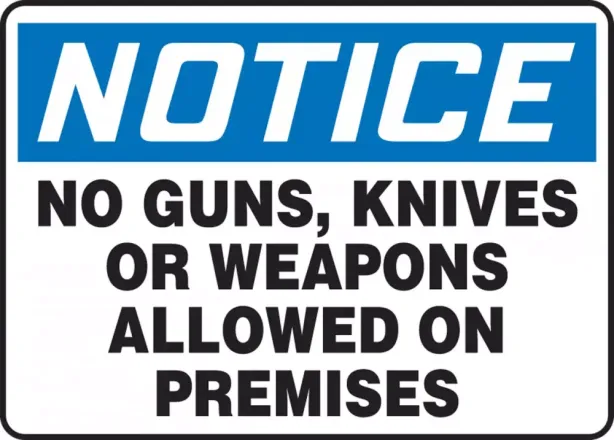
Invest in Some Common Sense with Safety and Security Signs
There is an unspoken contract one has with mayhem when it comes to investing in the safety and security and those around you. Namely, pay me now or pay me later, but you will pay me. If you are trying to save a few bucks by forfeiting your responsibility to post some common sense signage for the day mayhem shows up at your workplace or school then you will pay big. Not to mention a great deal of safety and security signage is required by the federal government who won’t mind dropping a big fine on you as well. Posting appropriate signage to warn of dangers or direct others to safety is one of the most common sense safety measures an organization can take. If that’s your responsibility then don’t fret. We’ve got you covered with just about any sign you can imagine.
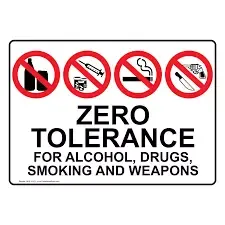
How Do I Improve Facility Safety with Proper Security Signage?
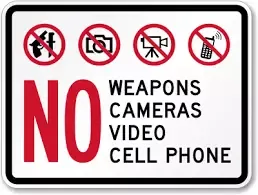
When launching a business, you want to make sure your customers know you take their safety and security seriously. Especially after the past few year's Pulse Nightclub shooting, London Bridge violence and San Bernadino workplace bloodshed, the increase of violence has people on edge. When walking onto my daughter's school campus, I now take note of signs indicating I need to sign in at the office, and I sleep more soundly knowing safety procedures are in place. Just last weekend, my family and I visited the US National Whitewater Center, and our visit was smooth, should I even dare to say - it flowed well (pun intended) because of the signage. We knew where to go, that weapons of any kind were not allowed (and they checked bags too), but unlike our recent theatre experience, cameras and cell phones were permitted, even encouraged if they were waterproof!
How to Keep Your Construction Site and Workplace Facility Safe and Secure with Lockouts
Safety and security are of the utmost importance at construction sites and workplace facilities. It’s vitally important to be avoid accidental injuries and fatalities, as well as to be in compliance with OSHA regulations. For these reasons, it’s critical to have the most reliable, durable and re-usable lockout devices to protect electrical boxes, cabinets, and machinery, and prevent dangerous unintentional equipment start-up. Here is an overview of lockout equipment that you can utilize to make your job site or facility safe and secure.
continue reading
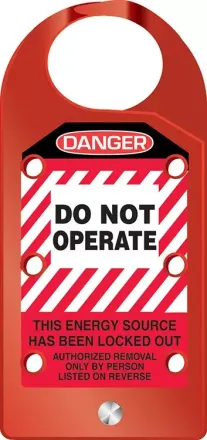
A high-quality lockout hasp is both safe and versatile, allowing you to use one or several padlocks to secure all types of machines, electrical panels, breaker boxes, and other electrical sources. The hasp should exceed OSHA requirements, should not open until every padlock is removed, and must be rugged enough to withstand corrosive and harsh industrial environments. For example, the Danger - Do Not Operate Hasp has a scissor-style closure and is made from high-strength aluminum, while the danger tag alerts workers to a hazardous situation.
What are Some Key Guidelines for Correct Safety Signage in the Workplace?
Imagine this scenario: A worker is badly injured on your job site. Not only is this a tragic event for the worker and his or her family, it’s also a huge risk for a lawsuit that could have debilitating fiscal ramifications for your company.
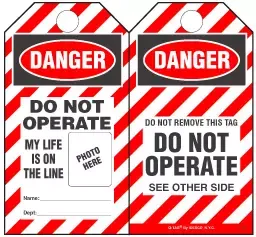
Fortunately, correctly designed signage can go a long way toward preventing injury and even death in the workplace. But how can you know that the signs you are posting are compliant with the standards set by Occupational Safety & Health Administration (OSHA) and the American National Standards Institute (ANSI)? Here’s how to be sure that the safety signage you are posting is doing its utmost to help prevent injury or death:
Durable Security Signs Offer Clear Notices and Convenience
Workplace, industrial, transportation, commercial, and public-space security is increasingly important in our complex world. Highly mobile societies and international commerce move quickly and depend on security standards and communication that enable public safety, sound commercial relations, efficiency, and reliability. Properly and clearly communicating about workplace and public-space security rules, standards, permissions, requirements, etc. is a subject for regulatory agencies worldwide. It’s also – for better or worse – a subject of intense lawyer-class scrutiny.
continue reading
A Sign Can Save Lives
Going out to a nightclub is supposed to be an occasion of joyful celebration, full of the promise of meeting new people, dancing, laughing and blowing off some steam with friends. However, in the aftermath of the shooting at the Pulse Nightclub in Orlando, Florida, what began as a night of fun ended in tragedy.
Sadly, the last century has seen some of the deadliest nightclub and assembly fires known to man. Many were the result of attendees getting trapped inside of buildings where they were gathered to hear music and socialize during the prohibition and post prohibition era. The deadliest of these disasters was the fire at Boston’s Cocoanut Grove Theater –the second worst single building fire in American history (second only to the Iroquois Theatre fire). The space was over its authorized capacity by 32 people, and they all lost their lives to the deadly blaze. The enormity of the event was so shocking that it briefly replaced the news of World War II in papers, and it led to a reform of safety standards and codes across the country.
5 Types of Signs and How They Improve Workplace Safety
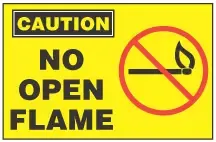
Safety signs may be considered one of the most basic and fundamental forms of safety equipment. For over 100 years, safety signs have been encouraged or required in specific parts of the workplace, spelled out in the primary language(s) of the workers. They save thousands of lives every year and continue to play an important role in preventing injuries in the workplace.
In 1941, standards for safety signs were introduced by the American Standards Association (later to become ANSI). These standards introduced formats for DANGER, CAUTION, NOTICE, and EXIT signs, to name a few. While many aspects of those early standards still hold today, globalization now has more of an effect. In 2007, ANSI published guidelines that coordinated with ISO label formats, ushering in a new era of global best practices in safety signs for the workplace.
Self-Laminated Safety Tags Offer Compliance Convenience
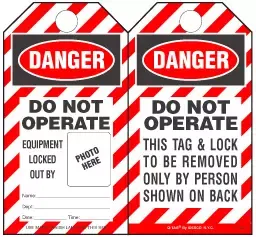
Workplace, industrial, transportation, and commercial safety is a big deal these days. The wheels of international commerce are greased with safety standards that enable efficiency, reliability, and sound commercial relations. Properly marking equipment, chemicals and hazardous materials is a subject closely regulated by the U.S. Occupational Safety and Health Administration (OSHA), conventions like the Globally Harmonized System of Classification and Labeling of Chemicals (GHS), and other regulatory agencies across the globe—not to mention being the subject of intense scrutiny by the lawyer class.
continue reading
The Global Harmonization Code
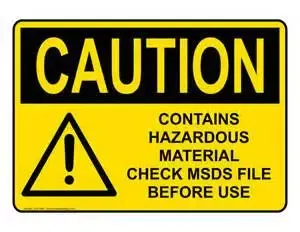
The Globally
Harmonized System of Classification and Labeling of Chemicals (GHS) were
designed to standardize the critically important method of shipping hazardous
toxins throughout the world. Many countries have had their own regulatory
system for classifying and labeling. However, what one country may classify a
chemical as “somewhat toxic” another country may classify the same chemical as
“very toxic.” And a third country may classify that very same chemical as “benign.”
Chemicals involved in shipping include Physical Hazards – chemicals with
explosive properties, flammables, oxidizers, corrosives and gases. Other types
in include chemicals that are considered Health Hazards. They include chemicals
that cause burns, effect breathing or those that lead to organ damage and
cancer. And there are chemicals that can affect the environment. With each
country developing their own classifications for these types of chemicals, it
is easy to see how it is dangerous and virtually impossible it is for each
country to be sure of how each chemical being imported to their country
actually fits into their own standards. With this new Global system, each
country that signs off to the program will have the same classifications for
each and every chemical they import and export.

Laminating Pouches for Home and Business
Important Documents must be protected if they are to maintain their integrity for any length of time. It could be a Driver’s License, an identification badge, a birth certificate, an award, a legal document, a photo, a menu or piece of art. In order to protect it properly and be assured that it will last indefinitely, it should be laminated. Once a document is laminated, there is no worry that an inadvertent spill of water or other liquid will ruin the document. A child’s crayon will not be able to leave a mark. The document will not be accidently folded. Photos of loved ones will remain as good as new as you review them over many years. Menus in your restaurant can be used over and over and over again. Legal documents will not tear or wrinkle. Identification cards remain legible and valid in your wallet.