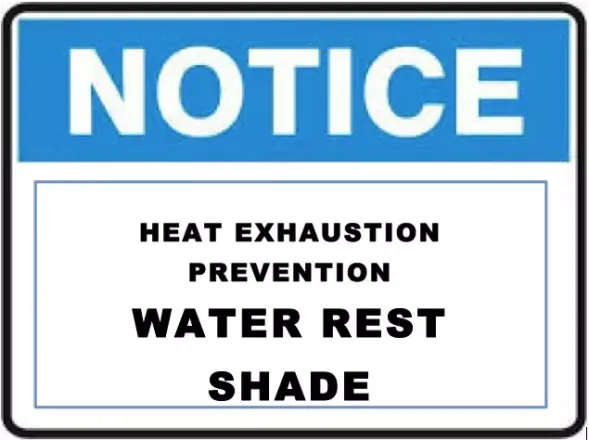
Heat Related Worker Illness
Since 2008 there have been 107 Heat-Related Deaths in the
continental United States. Each year there are thousands of heat-related
illnesses. That is why OSHA has developed a Nationwide Heat Illness Campaign
designed to raise awareness to both employers and employees about the dangers
of working in heat and hot weather. Those most affected by the heat include but
are in no way limited to the in the construction trade, utilities, agriculture
and oil and gas exploration. New employees, temporary employees and those
returning to work after a period of time off are especially vulnerable to the
heat as it takes some time to build up a tolerance to it.
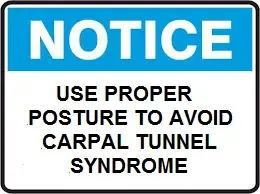
Carpal Tunnel Syndrome
When excessive continuous pressure is placed on the medium nerve, the nerve that allows feeling to parts of the hand, the condition known as Carpal Tunnel Syndrome develops. The primary symptom of Carpal Tunnel Syndrome (CTS) is numbness of the thumb, index finger and ring finger. When one bends a wrist forward for any length of time and feels pain it is a sure sign that CPS is present. The Occupational Safety and Health Administration (OSHA) have identified work related repetitive tasks, force, posture and vibration as major causes of CTS. A recent study showed that there is in many instances, a greater risk for CTS to affect worker production, than basic physical factors such as obesity. It should be noted that similar injuries caused by falls, slips, motor vehicle accidents or other similar accidents are not recognized as work-related causes of CTS by OSHA.
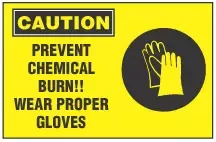
Severe Burns in the Workplace
On average there are over 200 deaths and over 5,000 injuries caused by fires, electrical and chemical burns, radiation, scalding water and explosions in the workplace every year. Fires can be caused by accidents at industrial food preparation ovens, overheated and shorted out wiring, from welding mishaps, spills and leaks of sulfuric acid, hydrofluoric acid, strong bases such as sodium hydroxide and ammonia and burns from scalding hot water.
Employers should have trained personnel on site at all times who know how to identify and treat both minor burns and serious burns. The epidermis is the outer layer of the skin. The dermis is the inner layer of the skin. First degree burns affect only the epidermis. Symptoms involve a very red and painful burn. Second degree burns involve the entire epidermis and upper layer of the dermis. Blisters are usually present, the wound is pink, wet in appearance and very painful. A Third degree burn involves all layers of skin being destroyed and the fatty tissue known as the subcutaneous tissue, under the skin. In a fourth degree burns all layers of skin and muscle and bone are affected.
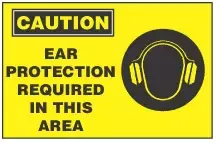
Noise Related Hearing Loss In The Workplace
Government regulations and in-house safety rules have really concentrated on the prevention of physical harm to employees. We generally think of injuries in the workplace as falling into the categories of slips and falls, injuries to eyes and inhalation of dust and chemical vapors to name a few. However, actually it is noise-related hearing loss that is listed as one of the most prevalent occupational concerns for many years. It has been reported than in the past 10 years, nearly 125,000 workers have suffered permanent hearing loss.
First-Aid Practices In The Workplace
The Occupational Health Admiration (OSHA) states that First-Aid is any one-time treatment along with a follow-up treatment dealing with minor scratches, cuts, burns, splinters and other minor industrial injury that may occur during the average work day. According to CFR 1910.151 “The employer shall ensure the ready availability of medical personnel for advice and consultation on matters of plant health.” Generally first-aid treatments are simple and require little technology. However, assuming there is no infirmary on site, there must be at least one person, preferably more, who are trained to provide first aid. A workplace must also provide facilities and equipment for treating the eyes and body should an employee be injured by coming into contact with corrosive material. Along with these basic first-aid requirements, a number of OSHA standards require training in cardiopulmonary resuscitation (CPR.)
The Dangers of Silica Inhalation
It takes just a
very small amount of inhalation of crystalline silica particles to cause
serious problems to plant workers. Initial symptoms include but are not limited
to shortness of breath, weakness and weight loss. Many cases of Silicosis can be shown to eventually
lead to lung cancer, pulmonary and kidney disease. Crystalline silica is found in virtually every
type of industrial environments. The largest areas of exposures are caused by the
everyday factory operations such as abrasive blasting, cement and brick
manufacturing, asphalt pavement manufacturing, china and ceramic manufacturing
and the tool and die industries. In addition, the manufacturing of adhesives,
paints, soaps and glass are made with crystalline silica.
Fork Lift Safety
Fork Lift Trucks are used to raise, lower or move large objects or several smaller objects at the same time. They can be driven by an operator or mechanically controlled. In either case, identifying the hazards of moving heavy materials in this manner is of prime importance.
When heavy objects are moved from place to place, there is the possibility of at least some of the objects falling off the forklift. And as the objects can be well off the ground in a fork lift truck, it can lead to a serious accident. There is also the possibility as with all moving vehicles that someone walking nearby can be hit by the fork lift. Also, the driver may inadvertently make a wrong turn and crash into a wall, equipment or even another vehicle.
The Importance of Ergonomics
June is National Safety Month and there are many things we can do as employers and employees.
In the workplace Ergonomics is an important key to safety. This month is a good time to identify and abate musculoskeletal disorders (MSDs.) These include strains, sprains and tears, inflammation, pinched nerves and spinal disc problems.

Thermoplastic Non-Conductive Padlocks
Thermoplastic padlocks are designed exclusively to satisfy CFR 1910.147 Lockout:Tagout regulations. They are durable, lightweight and are non-conductive. Thermoplastic is an excellent insulator preventing the flow of electricity. Static electric charges can remain in equipment even after the equipment has been shut down. Using thermoplastic padlocks for lockout:Tagout use means that the padlocks can be used around heat or electrical equipment with little concern that electronic sparking will occur. In addition, the key retaining feature insures the padlock will not remain unlocked. The key cannot be removed while the padlock is open. A very important fact when equipment is being repaired and lockout procedures are in place.
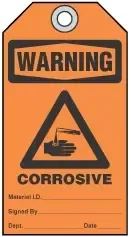
Chemical Hazards In The Workplace
The OSHA Regulation CFR1910.1200 “Toxic and Hazardous
Substances” is intended to address comprehensively the issue of classifying the
potential hazards of chemicals and communicating information concerning hazards
and appropriate protective measures to employees, and to preempt any
legislation or regulatory enactments of state, or political subdivision of a
state, pertaining to the subject.
Toxic Industrial chemicals are manufactured, stored,
transported and used throughout the world. They can be found in the form of
gas, liquid or solid state. The hazards they contain include carcinogens,
corrosives and reproductive hazards. Toxic chemicals can also be highly
flammable, combustible, explosive or reactive.
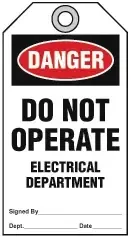
Electrical Safety In The Workplace
The Electrical
Safety Foundation International (EDFI) has designated May as National Electrical
Safety Month. On average, there are more than 300 deaths and over 4,000
injuries per year caused by Electrical Hazards in workplaces here in the United
States. Over 60% of the injuries are due to electric shock, the remainder
caused by electric burns. Electric shock is caused by either direct or indirect
contact with a conductive part that is energized. Electrical arcing, explosions
or fire result in burns. Toxic gases released as a result of fire as well as
the burning of electrical equipment often leads to severe illness or death.
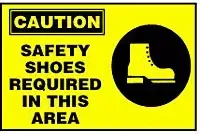
Protective Footwear
The Personal
Protective Equipment regulation, CFR 1910.136 has a very comprehensive set of
requirements when addressing employee’s foot protection. It states that “The
employer shall ensure that each affected employee uses protective footwear when
working in areas where there is a danger of foot injuries due to falling or
rolling objects piercing the sole, and where such employee’s feet are exposed
to electrical hazards. The ruling continues with the statement that protective
footwear must comply with The American Society for Testing and Material (ASTM)
regulation “Standard Specification for Performance Requirements for Protective
Footwear. And, by definition, that standard meets the qualifications
established by The American National Standards Institute (ANSI) regulation.
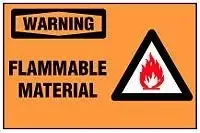
Hazardous Materials
Hazardous Materials in the form of solids, liquids or gases can be a danger to all living things, property and our environment. Because they are used in the manufacture and the shipment of all types of products they are very closely regulated. Within the regulations are the specifications for the clear labeling of these materials to announce their presence and thus to avoid the possibility of injury or damage. Developed by The American National Standards Institute (ANSI), Hazardous Material Symbols have become the international standard involved in identification labeling. Each hazardous material has its own specific symbol, colors, borders and printed information to help readily identify the danger one may encounter when coming in contact it. Besides the ANSI standard, many federal, state and local laws as well as international laws require Hazardous materials to be identified. Here is a listing of some of the basic Hazardous Material Symbols:
Improving The Tracking of Workplace Injuries and Illnesses
Improving
The Tracking of Workplace Injuries and Illnesses
continue reading
According to The Occupational Health Administration (OSHA)
records, there were 4,383 workers killed on the job in 2012. This means that
there is an average of 3.2 workers who lost their lives for every 100,000 full
time workers. That works out to 84 per week or 12 deaths per day. The rate of
non-fatal occupational injury and illness cases requiring days away from work
to recover was 112 cases per 10,000 workers. The median days away from work
were 9 days. It has been estimated that the cost of productivity costs as well
as direct medical costs for these injuries totals 250 billion dollars per year.
According to The
National Institute for Occupational Safety and Health (NIOSH), preventing
work-related injuries and illnesses is part of a wise national strategy for
economic recovery and growth. Toward that goal, according to the Proposed rule
posted by The Federal Register, Doc NO. 2013-26711, here is the proposed rule:
“Improve Tracking of Workplace Injuries and Illnesses.”

Locking Out Valves During Maintenance
A number of various chemicals, hot or cold water as well as steam can cause serious injury to a worker performing maintenance. According to the OSHA regulation 1910.147, “The Control of Hazardous Energy” (Lockout/Tagout) all sources of energy to include, hydraulic, pneumatic, chemical and thermal must be locked out during a maintenance operation. To help satisfy that requirement, devices have been developed to insure that both liquids and gases are securely locked out.